
Volition Announces Breakthrough Finger-Prick Detection of Nucleosomes; Expanding Global Market Potential for Sepsis Testing
Rhea-AI Summary
Volition (NYSE AMERICAN: VNRX) announced successful detection of nucleosomes in capillary (finger-prick) blood from ICU sepsis patients using a lateral flow prototype. The study, part of the SUMMIT program, showed feasibility of bedside or home point-of-care testing and referenced prior correlation with venous samples and the automated Nu.Q laboratory assay. Management said the device could enable quantitative, rapid nucleosome readouts and expand access in low-income countries via NGO and strategic partnerships. The company cited an estimated 166 million global sepsis cases as the addressable market.
Positive
- Demonstrated nucleosome detection in capillary blood using finger-prick lateral flow prototype
- Study conducted in ICU patients as part of the SUMMIT program
- Company plans NGO partnerships and strategic collaborations to target low-income countries
- Cited global addressable market: approximately 166 million sepsis cases
Negative
- Prototype stage: full study details and peer-reviewed data not yet released
- No regulatory approvals or commercialization timeline disclosed
News Market Reaction – VNRX
In the Apr 29 session, VNRX declined 5.04%, reflecting a notable negative market reaction. Argus tracked a peak move of +6.2% during that session. Argus tracked a trough of -16.2% from its starting point during tracking. Our momentum scanner triggered 24 alerts that day, indicating elevated trading interest and price volatility. Trading volume was elevated at 2.1x the daily average, suggesting increased selling activity.
Data tracked by StockTitan Argus on the day of publication.
Key Figures
Historical Context
| Date | Event | Sentiment | 24h Move | Catalyst |
|---|---|---|---|---|
| Apr 23 | Listing compliance plan | Positive | -8.7% | NYSE American accepted VNRX’s plan to regain listing compliance by 2027. |
| Apr 20 | Product launch | Positive | -8.7% | Launch of rNuQ™ webshop expanding Nu.Q® Discover commercial offering. |
| Mar 31 | Earnings and update | Positive | -1.0% | 2025 results showed revenue growth, lower expenses, and reduced cash burn. |
| Mar 31 | Non‑dilutive funding | Positive | +6.3% | Secured €2.0M non‑dilutive funding to support Nu.Q® and lateral flow R&D. |
| Mar 30 | Clinical study data | Positive | -3.4% | Mayo Clinic study showed elevated Nu.Q® nucleosomes in trauma and VTE risk. |
24h Move is the share-price change in the day after each event; other market factors may also have contributed.
Recent history shows VNRX often trading down after generally positive news, with only one of the last five events seeing a positive next‑day move.
Over the past month, Volition has reported 40% revenue growth in 2025, non‑dilutive Belgian funding of €2.0M, and encouraging Nu.Q® trauma data, yet four of five prior news items were followed by negative or muted price reactions. The latest announcement on finger‑prick nucleosome detection for sepsis sits within an ongoing push to expand Nu.Q® applications and Point‑of‑Care access, while the company simultaneously manages listing compliance and capital structure changes such as a one‑for‑twenty reverse split.
Key Terms
nucleosomes medical
capillary blood medical
lateral flow medical
Point-Of-Care medical
NETosis medical
AI-generated analysis. How Rhea-AI works. Not financial advice.




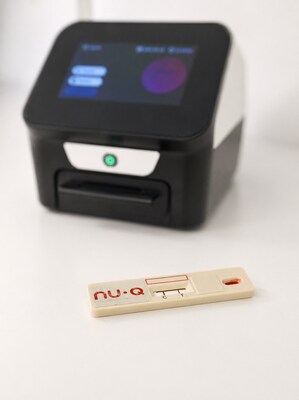
Volition has previously announced results demonstrating correlation between whole venous blood (standard blood draw from the arm) samples utilizing its lateral flow prototype, and those of Volition's established automated Nu.Q® nucleosome assay performed in a central laboratory.
This study, part of the SUMMIT program, tested capillary blood samples from hospital patients in Intensive Care using a lateral flow finger-prick prototype and demonstrated the detection of nucleosomes in those samples. Results showed the feasibility of early detection of immune disruptions that can occur in a range of conditions including sepsis, simply and rapidly when using the test in a variety of settings (doctor's office, Emergency Department, Intensive Care Unit setting, or home self-test), without the need to send a blood sample to a hospital laboratory for testing.
Dr. Gaetan Michel, Chief Operating Officer, Volition said:
"This prototype technology has the exciting potential to strengthen our product portfolio by addressing critical unmet diagnostic needs with an accessible, cost-effective solution enabling rapid, minimally invasive, Point-Of-Care self- testing.
"By enabling decentralized testing, our total addressable market expands, and we plan to target NGO partnerships and strategic collaborations with companies active in low income countries to accelerate commercialization and market penetration.
"We are excited to announce this breakthrough and look forward to sharing full details of the study and commercial updates throughout the year."
Mr. Cameron Reynolds, Chief Executive Officer, Volition said:
"The ability to rapidly identify high-risk patients at the Point-of-Care by quantifying their nucleosome levels using a finger-prick sample and simple lateral flow device could enable quicker clinical decision making and consequently better patient outcomes.
"We believe that this is a first-in-class breakthrough which positions Volition as a pioneer in capillary blood-based nucleosome diagnostics, unlocking a new and highly scalable, portable testing modality. To our knowledge, this is the first reported finger-prick lateral flow test to quantify nucleosomes, a marker of NETosis and diseases such as sepsis. Our aim going forward is to provide not just a positive-negative test, but also to give a quantitative readout to facilitate clinical decision-making on a low-cost platform suitable for widespread adoption around the world.
"With recent estimates indicating approximately 166 million cases of sepsis worldwide the addressable market is huge. All-cause sepsis related deaths in 2021 represented
"This is a potential gamechanger, not only in diseases where time is critical such as sepsis, but also in significantly expanding potential use cases beyond traditional hospital infrastructure. It also creates a compelling pathway into underserved low-income countries, where laboratory infrastructure may be weak or non-existent."
- Gray, Authia P et al. Global, regional, and national sepsis incidence and mortality, 1990–2021: a systemic analysis. The Lancet Global Health, 2025; 13(12): e2013-e2026. doi: 10.1016/s2214-109x(25)00356-0
About SUMMIT (Sepsis: addressing unmet needs for disease monitoring with a rapid test)
This innovative project, aimed at developing a capillary blood-based lateral flow test for the early diagnosis of sepsis, is carried out with the financial support of the Walloon Region.
About Lateral Flow Tests
The first commercial Lateral Flow Test (LFT), the Clearblue pregnancy test, was launched in the late 1980s. More recently, LFTs for COVID-19 virus were widely used during the COVID-19 pandemic. LFTs are designed rapidly to detect a molecule of interest in a simple test that can be conducted immediately on a patient's blood, urine or saliva sample in a doctor's office or even a home setting by a person with no scientific training and using no specialized equipment.
About Volition's Nu.Q® Nucleosome Assay
The Volition Nu.Q® nucleosome assay is a chemiluminescent immunoassay (ChLIA) that currently runs on the Immunodiagnostic Systems (IDS) i10® automated analyzer platform. It holds a CE Mark to aid in the detection and evaluation of diseases associated with NETosis and is available in 27 European Countries.
About Volition
Volition is a multi-national company focused on advancing the science of epigenetics. Volition is dedicated to saving lives and improving outcomes for people and animals with life-altering diseases through earlier detection, as well as disease and treatment monitoring.
Through its subsidiaries, Volition is developing and commercializing simple, easy to use, cost-effective blood tests to help detect and monitor a range of diseases, including some cancers and diseases associated with NETosis, such as sepsis. Early detection and monitoring have the potential not only to prolong the life of patients, but also to improve their quality of life.
Volition's research and development activities are centered in
The contents found at Volition's website address are not incorporated by reference into this document and should not be considered part of this document. Such website address is included in this document as an inactive textual reference only.
Media Enquiries:
Louise Batchelor, Volition, mediarelations@volition.com, +44 (0)7557 774620
Safe Harbor Statement
Statements in this press release may be "forward-looking statements" within the meaning of Section 27A of the Securities Act of 1933, as amended, and Section 21E of the Securities Exchange Act of 1934, as amended, that concern matters that involve risks and uncertainties that could cause actual results to differ materially from those anticipated or projected in the forward-looking statements. Words such as "expects," "anticipates," "intends," "plans," "aims," "targets," "believes," "seeks," "estimates," "optimizing," "potential," "goal," "suggests," "could," "would," "should," "may," "will" and similar expressions identify forward-looking statements. These forward-looking statements relate to, among other topics, the exercise of the milestone-linked warrants upon the achievement of such milestone events or otherwise prior to their expiration, Volition's expectations related to revenue opportunities and growth, the timing, completion, success and delivery of data from clinical studies, the timing of publications, the effectiveness of Volition's cost reduction measures, the effectiveness and availability of Volition's blood-based diagnostic, prognostic and disease monitoring tests, Volition's ability to develop and successfully commercialize such test platforms for early detection of cancer and other diseases as well as serving as a diagnostic, prognostic or disease monitoring tools for such diseases, and Volition's success in securing licensing and/or distribution agreements with third parties for its products. Volition's actual results may differ materially from those indicated in these forward-looking statements due to numerous risks and uncertainties, including, without limitation, results of studies testing the efficacy of its tests. For instance, if Volition fails to develop and commercialize diagnostic, prognostic or disease monitoring products, it may be unable to execute its plan of operations. Other risks and uncertainties include Volition's failure to obtain necessary regulatory clearances or approvals to distribute and market future products; a failure by the marketplace to accept the products in Volition's development pipeline or any other diagnostic, prognostic or disease monitoring products Volition might develop; Volition's failure to secure adequate intellectual property protection; Volition will face fierce competition and Volition's intended products may become obsolete due to the highly competitive nature of the diagnostics and disease monitoring market and its rapid technological change; downturns in domestic and foreign economies; and other risks, including those identified in Volition's most recent Annual Report on Form 10-K and Quarterly Reports on Form 10-Q, as well as other documents that Volition files with the Securities and Exchange Commission. These statements are based on current expectations, estimates and projections about Volition's business based, in part, on assumptions made by management. These statements are not guarantees of future performance and involve risks, uncertainties and assumptions that are difficult to predict. Forward-looking statements are made as of the date of this release, and, except as required by law, Volition does not undertake an obligation to update its forward-looking statements to reflect future events or circumstances.
rNuQ™, Nucleosomics™, Capture-PCR™, Capture-Seq™ and Nu.Q® and their respective logos are trademarks and/or service marks of VolitionRx Limited and its subsidiaries. All other trademarks, service marks and trade names referred to in this press release are the property of their respective owners. Additionally, unless otherwise specified, all references to "$" refer to the legal currency of
Photo - https://mma.prnewswire.com/media/2968036/VolitionRx_Limited_Photo.jpg
 View original content to download multimedia:https://www.prnewswire.com/news-releases/volition-announces-breakthrough-finger-prick-detection-of-nucleosomes-expanding-global-market-potential-for-sepsis-testing-302755982.html
SOURCE VolitionRx Limited