
STOCK TITAN

Teradyne Introduces Integrated Test Solution for AI and Data Center Devices in Collaboration with Tokyo Electron

Rhea-AI Impact
(Neutral)
Rhea-AI Sentiment
(Very Positive)
Tags
partnership AI

Key Terms

known good device technical
A known good device is a previously tested, fully functioning unit kept as a reliable reference when evaluating, repairing, or validating other devices or systems. For investors, its use signals disciplined testing and quality control that shorten troubleshooting, reduce misdiagnosed failures, and lower the chance of costly recalls or production delays—factors that affect product reliability, regulatory standing, and long‑term costs.
2.5d/3d packages technical
2.5D and 3D packages are advanced ways of arranging computer chips: 2.5D places multiple chips side-by-side on a shared connector layer, while 3D stacks them vertically like floors in a building. They matter to investors because these designs can boost speed, lower power use, shrink product size and change manufacturing cost and yield—factors that affect a maker’s competitiveness, profit margins and growth prospects.
chiplet-based designs technical
Chiplet-based designs break a traditionally single large microchip into several smaller, specialized chips that are packaged to work together as one unit. Like assembling a device from Lego blocks, this approach can cut manufacturing costs, improve yields, and speed product upgrades by letting manufacturers mix and match components instead of remaking an entire chip. Investors watch this because it affects a maker’s production cost, product flexibility, time-to-market, and potential for partnerships across the supply chain.
singulated device prober technical
A singulated device prober is a piece of test equipment used to contact and measure the electrical performance of individual semiconductor chips or components after they have been separated from a wafer or strip. Think of it like a precision meter that checks each light bulb before it goes into a box; for investors, this matters because it affects product quality, manufacturing yield, test speed and cost, and therefore can influence a maker’s margins and time-to-market.
osats technical
Outsourced semiconductor assembly and test providers (OSATs) are companies that take finished silicon chips from chip makers and perform the packaging, final assembly and quality testing before the chips are shipped to device manufacturers. Think of them as specialized finishing factories that make sure fragile components are packaged and work reliably; their performance and capacity affect supply, costs and delivery times for the broader semiconductor industry, which can influence chipmakers’ margins and investors’ views on supply-chain risk.
probe cards technical
Probe cards are specialized fixtures used during semiconductor manufacturing to electrically test wafers before they are cut into individual chips; they act like a delicate, multi-point contact bridge that connects a testing machine to each tiny circuit on the wafer. Investors care because probe cards influence how quickly and cheaply chips can be validated and released—affecting production speed, yield (how many good chips are made), and the testing costs that flow into manufacturers’ margins and supply-chain timing.
ai technical
Artificial intelligence (AI) is technology that enables machines to mimic human thinking and learning, allowing them to analyze information, recognize patterns, and make decisions. For investors, AI matters because it can improve how businesses operate, create new products, or identify opportunities faster and more accurately than humans alone, potentially impacting company success and market trends.
See more from StockTitan in Google Search and AI answers. Adds StockTitan as a preferred source · opens Google
Add on Google

Teradyne’s UltraFLEXplus platform paired with Tokyo Electron’s probing technology delivers known good device screening for advanced 2.5D/3D packages.
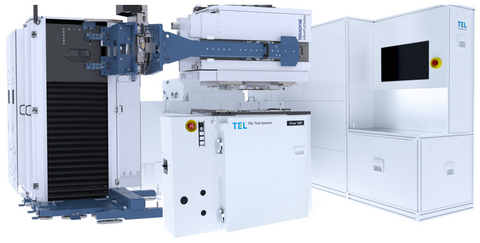
NORTH READING, Mass.--(BUSINESS WIRE)-- Teradyne, Inc. (NASDAQ: TER), a leading provider of automated test equipment and advanced robotics, today announced an integrated test cell solution supporting known good device (KGD) screening for devices used in AI and data center applications, developed in collaboration with Tokyo Electron (TEL™). The solution pairs Teradyne’s UltraFLEXplus platform with TEL’s Prexa™ SDP (Singulated Device Prober) to provide fabless designers, foundries, and OSATs a production-ready path to high-quality device screening at multiple points in the advanced packaging flow.

Teradyne and Tokyo Electron (TEL) have collaborated to deliver an integrated test cell solution supporting known good device screening for devices used in AI and data center applications. The solution pairs Teradyne’s UltraFLEXplus platform with TEL’s Prexa™ SDP to provide fabless designers, foundries, and OSATs a production-ready path to high-quality device screening at multiple points in the advanced packaging flow.

Teradyne and Tokyo Electron (TEL) have collaborated to deliver an integrated test cell solution supporting known good device screening for devices used in AI and data center applications. The solution pairs Teradyne’s UltraFLEXplus platform with TEL’s Prexa™ SDP to provide fabless designers, foundries, and OSATs a production-ready path to high-quality device screening at multiple points in the advanced packaging flow.

As AI and data center device architectures increasingly adopt chiplet-based designs that integrate multiple die into a single 2.5D or 3D package, a single defective die can compromise the entire high-value package. Adding KGD screening is essential to protecting final yield, improving quality, and maximizing output.

The joint solution between Teradyne and TEL delivers a validated test cell designed to reduce integration risk for high-volume manufacturing. Within the test cell, Teradyne’s UltraFLEXplus instruments coordinate with TEL’s Prexa SDP, which maintains device temperature and manages the high-power dissipation characteristics typical of leading-edge AI silicon.

Built on an open ecosystem architecture, the solution provides customers with flexibility across complementary probe cards, manipulators, and interface technologies, and can be integrated with other probers or testers as required.

“AI device innovation is moving at an unprecedented speed, and our customers need dependable screening at every stage of advanced packaging,” said Shannon Poulin, president of the Semiconductor Test Group at Teradyne. “TEL’s industry-leading Prexa SDP, combined with Teradyne’s UltraFLEXplus, gives customers a production-ready solution that covers singulated device testing with the thermal precision, power density, and digital performance that today’s AI and data center devices require.”

The commercially available solution, developed by Teradyne in collaboration with TEL, represents a significant advancement in meeting the rigorous demands of AI and data center device manufacturing. By combining Teradyne's UltraFLEXplus platform with TEL's industry-leading Prexa SDP prober, customers gain access to a robust, production-ready KGD screening solution that helps ensure advanced 2.5D and 3D packages achieve the reliability and performance required for next-generation AI and data center architectures.

To learn more about this integrated TEL and Teradyne solution, visit TEL at booth 613 and Teradyne at booth 513, at SWTest, June 8-10, 2026, at the Omni La Costa Resort in Carlsbad, California.

About Teradyne

Teradyne (NASDAQ:TER) designs, develops, and manufactures automated test equipment and advanced robotics systems. Its test solutions for semiconductors and electronics products enable Teradyne's customers to consistently deliver on their quality standards. Its advanced robotics business includes collaborative robots and mobile robots that support manufacturing and warehouse operations for companies of all sizes. For more information, visit teradyne.com. Teradyne® is a registered trademark of Teradyne, Inc., in the U.S. and other countries.

About Tokyo Electron

As a leading global company of innovative semiconductor production equipment, Tokyo Electron (TEL) engages in development, manufacturing, and sales in a wide range of product fields. All of TEL's semiconductor production equipment product lines maintain high market shares in their respective global segments. TEL provides outstanding products and services to customers through a global network in the U.S., Europe, and Asia. Please visit https://www.tel.com/ for more information.

For more information:
Amy McAndrews
Investor Relations
Tel 978.370.3945
investor.relations@teradyne.com

Source: Teradyne, Inc.