
STOCK TITAN

PG&E Launches the PG&E PowerHouse -- An All-Electric Home Designed to Make Electrification Easier and More Affordable

Rhea-AI Impact
(Moderate)
Rhea-AI Sentiment
(Positive)
Tags

Pacific Gas and Electric (NYSE:PCG) on April 17, 2026 launched the PG&E PowerHouse, an all‑electric model home and living lab at its San Ramon ATS facility to demonstrate and validate clean home technologies.

The PowerHouse showcases bidirectional EV charging, smart panels and meters, heat pumps, battery storage, induction cooking, and energy management tools to simplify electrification and inform customer programs.

Loading...
Loading translation...

AI-generated analysis. Not financial advice.

Positive

  • None.

Negative

  • None.

News Market Reaction – PCG

-0.63%
1 alert
-0.63% News Effect

On the day this news was published, PCG declined 0.63%, reflecting a mild negative market reaction.

Data tracked by StockTitan Argus on the day of publication.

Key Figures

V2X incentive: $4,500
1 metrics
V2X incentive $4,500 Incentives toward eligible equipment for customers in PG&E’s V2X program

Market Reality Check

Price: $16.81 Vol: Volume 22,128,219 is slig...
normal vol
$16.81 Last Close
Volume Volume 22,128,219 is slightly below the 23,194,591 20-day average, indicating typical interest ahead of this announcement. normal
Technical Trading above the 200-day MA at 15.95, indicating a pre-news uptrend bias.

Peers on Argus

PCG slipped 0.12% while key regulated electric peers like ED, WEC, DTE, ETR, and...

PCG slipped 0.12% while key regulated electric peers like ED, WEC, DTE, ETR, and PEG were all positive (e.g., WEC up 1.7%, PEG up 1.51%), pointing to stock-specific dynamics rather than a sector-wide move.

Historical Context

5 past events · Latest: Apr 07 (Positive)
Pattern 5 events
Date Event Sentiment Move Catalyst
Apr 07 Customer bill credits Positive -0.3% Spring California Climate Credit applied automatically to customer bills.
Apr 02 License renewal Positive +0.1% NRC approval for 20-year Diablo Canyon license renewal.
Apr 01 Safety reminder Neutral +1.0% Call 811 campaign to avoid costly utility‑damage incidents.
Mar 26 Earnings scheduling Neutral -1.1% Announcement of Q1 2026 earnings release and conference call date.
Mar 02 Rate reductions Positive +0.6% Fifth electric rate cut since early 2024 for residential customers.
Pattern Detected

Recent operational and customer-focused news has usually seen modestly positive or mixed price reactions, with only one notable divergence.

Recent Company History

Over the last several weeks, PG&E has highlighted customer bill credits, nuclear license renewal at Diablo Canyon, safety reminders, and multiple electric rate reductions. Most of these announcements, such as rate cuts and regulatory approvals, were followed by modestly positive moves, while a climate credit update coincided with a small pullback. Today’s PowerHouse launch fits into this pattern of customer-focused and clean‑energy initiatives supporting PG&E’s broader strategy.

Market Pulse Summary

This announcement highlights PG&E’s PG&E PowerHouse, a fully electric model home and lab that showca...
Analysis

This announcement highlights PG&E’s PG&E PowerHouse, a fully electric model home and lab that showcases technologies like bidirectional EV charging, smart panels, and heat pumps, with incentives up to $4,500 for eligible V2X equipment. It extends a series of customer-centric and clean‑energy initiatives seen in recent months. Investors may track how learnings from this lab translate into scalable programs, cost impacts, and future regulatory or rate outcomes.

Key Terms

bidirectional electric vehicle (EV) charging, smart electric panels, heat pumps, battery energy storage, +4 more
8 terms
bidirectional electric vehicle (EV) charging technical
"clean energy technologies—including bidirectional electric vehicle (EV) charging, smart electric panels"
Bidirectional electric vehicle (EV) charging lets an electric car both draw electricity to charge its battery and send stored electricity back to the grid or into a home, acting like a mobile battery. For investors, it matters because vehicles become potential energy assets that can lower owners’ energy costs, provide backup power, and earn payments for grid services, which can change demand for charging hardware, utility economics, and the value chain around EVs.
smart electric panels technical
"technologies—including bidirectional electric vehicle (EV) charging, smart electric panels and meters"
A smart electric panel is an upgraded home or building circuit box that monitors, controls and optimizes how electricity is used and routed, often offering remote access, automatic load balancing and safety alerts. Like a traffic controller or a computer for a building’s wiring, it helps reduce waste, prevent outages and enable services such as time-of-use shifting and integration with solar or batteries—features investors watch because they can cut energy costs, create ongoing service revenue and respond to grid rules or incentives.
heat pumps technical
"including bidirectional electric vehicle (EV) charging, smart electric panels and meters, heat pumps, battery"
Heat pumps are electrically powered devices that move warmth from one place to another—for example drawing heat from outside air or the ground into a building in winter, or reversing to cool in summer—like a refrigerator working in reverse. They matter to investors because their higher efficiency compared with direct-burning heaters can cut energy bills and emissions, creating demand and shaping revenue for manufacturers, installers, utilities and related supply chains, while policy incentives and energy prices influence market growth.
battery energy storage technical
"meters, heat pumps, battery energy storage, and induction cooking—to help reduce cost"
A system that stores electrical energy in rechargeable batteries so power can be used later, like a large-scale rechargeable power bank for homes, businesses, or the electricity grid. It matters to investors because it helps smooth out supply and demand, lets operators sell power when prices are higher, backs up critical services during outages, and supports more renewable generation — all of which can create new revenue streams and reduce operational risk.
induction cooking technical
"heat pumps, battery energy storage, and induction cooking—to help reduce cost, complexity"
Induction cooking uses magnetic fields under a cooktop to heat pots and pans directly, rather than heating the surface first, so the pan itself becomes the heat source. For investors, it matters because induction ranges are more energy-efficient, faster, and often safer than traditional gas or electric stovetops, influencing appliance demand, manufacturing technology shifts, and energy-related cost and regulation trends in the home and commercial kitchen markets.
Vehicle-to-Everything technical
"building on PG&E's industry-leading Vehicle-to-Everything pilot program."
Vehicle-to-everything (V2X) is technology that lets a car communicate bidirectionally with other vehicles, road infrastructure, mobile devices and the electric grid, turning the vehicle into an active node on a network. For investors it matters because V2X can materially change revenue and cost structures across automakers, suppliers, telecoms, utilities and insurers by enabling new services (safety systems, traffic management, remote updates, or using parked electric vehicles as grid storage) that affect competitiveness and future cash flows.
grid‑edge intelligence technical
"collaboration with Itron to enhance the customer experience through grid‑edge intelligence called ChargeBoost"
Grid-edge intelligence is the software and controls that let devices at the edge of the electrical grid — like rooftop solar, batteries, smart meters and local controllers — make fast, local decisions about when to produce, store or use electricity. Investors care because it shifts value from centralized utilities to distributed hardware and services, can lower costs and outage risk, and creates new revenue streams from efficiency, demand response and software subscriptions; think of it as a smart traffic controller for electricity at your neighborhood level.
Electric Program Investment Charge (EPIC) regulatory
"electric R&D budget under the public purpose program Electric Program Investment Charge (EPIC)."
An electric program investment charge (EPIC) is a small, usually mandatory line-item on electricity bills that collects money to fund long‑term projects such as grid upgrades, energy efficiency programs, or clean‑energy research. Think of it like a neighborhood fund paid by many households to finance shared infrastructure improvements; for investors it matters because EPICs affect utility revenues, customer costs, and the pace or funding certainty of future energy investments.

AI-generated analysis. Not financial advice.

The PG&E PowerHouse is a fully electric model home and living lab built to take the guesswork out of electrification
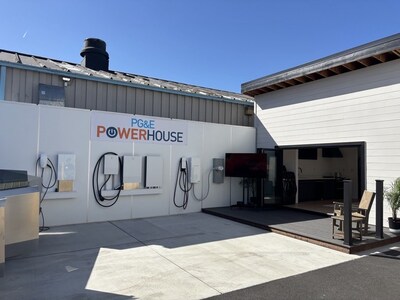
OAKLAND, Calif., April 17, 2026 /PRNewswire/ -- Pacific Gas and Electric Company (PG&E) today unveiled the PG&E PowerHouse, an all‑electric model home and technology demonstration lab located at PG&E's Applied Technology Services (ATS) facility in San Ramon, California.

The PG&E PowerHouse is where PG&E and its partners test, integrate, and validate clean energy technologies—including bidirectional electric vehicle (EV) charging, smart electric panels and meters, heat pumps, battery energy storage, and induction cooking—to help reduce cost, complexity, and uncertainty for customers interested in electrification.

Designed as both a model home and living laboratory, the PowerHouse allows customers, contractors, policymakers, and partners to see how an all‑electric home works in real life—from everyday comfort and energy management to resilience during power outages.

"Seeing is believing," said Mike Delaney, Vice President, Strategy and Innovation at PG&E. "The PG&E PowerHouse demonstrates an easy and enjoyable electrified future for our customers. We are tenaciously working every day to eliminate the barriers of cost, time, and complexities so that our customers can make this transition free of hassle and stress." 

Built to Remove the Biggest Barriers to Electrification
For many customers, electrification can feel expensive and confusing, with concerns about electrical upgrades, device compatibility, and long‑term costs.

The PowerHouse was built to tackle those challenges head on by integrating and testing solutions that make electrification simpler, more flexible, and more accessible.

The PG&E PowerHouse is equipped with a range of modern clean energy technologies that can enable customers to:

  • Add electric appliances and EV charging without costly panel upgrades
  • Manage energy use more intelligently to control costs
  • Improve home resilience, including backup power using electric vehicles
  • Adopt electrification step-by-step, instead of all at once. PG&E recently launched the Clean Energy Calculator, powered by GridX, to help customers understand costs and savings potential before deciding what is best for their home now and down the road.

This work builds on PG&E's broader efforts to enable affordable electrification, including initiatives like PG&E's collaboration with SPAN to deploy SPAN Edge technology through a new, forthcoming offering called PanelBoost, which helps customers add EVs and electric appliances without expensive electrical service upgrades.

Real Technologies, Tested Together in One Home
The PG&E PowerHouse brings together technologies in a single home environment—including:

  • Bidirectional electric vehicles, demonstrating how EVs can serve as home energy assets and provide grid support, building on PG&E's industry-leading Vehicle-to-Everything pilot program. Customers enrolled in PG&E's V2X program may qualify for up to $4,500 in incentives toward eligible equipment.
  • Smart electric panels and advanced meters, showing how homes can manage electrical loads safely and efficiently
  • Highefficiency appliances, including heat pump space and water heating and induction cooking, replacing gas systems while maintaining comfort.
  • Smart EV charging and energy management, helping customers balance convenience, reliability and cost

These demonstrations complement PG&E's expanded collaboration with Itron to enhance the customer experience through grid‑edge intelligence called ChargeBoost, which is designed to make home electrification easier and more affordable while improving grid reliability. 

Many of the projects and technologies tested at the PG&E PowerHouse are funded through PG&E's electric R&D budget under the public purpose program Electric Program Investment Charge (EPIC). EPIC supports the demonstration of emerging technologies that advance safety, reliability, affordability, environmental sustainability, and equity for California electric customers.

Turning Innovation into Clear Guidance for Customers
The PG&E PowerHouse is more than a showcase—it is a working lab that helps PG&E translate innovation into clearer guidance, better programs, and simpler customer pathways.

By testing technologies in real‑world home conditions before they scale, PG&E can help ensure customers benefit from solutions that are practical, proven, and ready to deploy. Insights from the PowerHouse will inform future customer programs, contractor guidance, and investments designed to lower costs and simplify electrification.

Following today's launch, the PG&E PowerHouse will serve as a long‑term demonstration and learning space, hosting tours, technology showcases, partner collaborations, and community engagement focused on the future of electric living.

By grounding innovation in a real home environment, PG&E aims to help customers see not just what's possible—but what's practical.

Learn More About Electrifying Your Home
Customers interested in learning more about electric appliances, EV charging, rebates, and programs can visit https://www.pge.com/electrify for tools and resources to help plan their electrification journey.

About PG&E
Pacific Gas and Electric Company, a subsidiary of PG&E Corporation (NYSE: PCG), is a combined natural gas and electric utility serving more than sixteen million people across 70,000 square miles in Northern and Central California. For more information, visit pge.com, pge.com/news and pge.com/innovation.    

Cision View original content to download multimedia:https://www.prnewswire.com/news-releases/pge-launches-the-pge-powerhouse--an-all-electric-home-designed-to-make-electrification-easier-and-more-affordable-302746191.html

SOURCE Pacific Gas and Electric Company

FAQ

What is the PG&E PowerHouse launched April 17, 2026 by PCG?

The PowerHouse is an all‑electric model home and living lab demonstrating clean home technologies. According to the company, it integrates EV bidirectional charging, smart panels, heat pumps, battery storage, induction cooking, and energy management to simplify electrification for customers.

How does PCG's PowerHouse help customers avoid costly electrical upgrades?

The PowerHouse shows solutions that add EV charging and appliances without expensive service upgrades. According to the company, technologies like SPAN Edge and PanelBoost aim to reduce the need for costly panel upgrades and simplify electrification steps.

What incentives are available for PG&E V2X participants mentioned in the PowerHouse launch?

Eligible customers in PG&E's V2X program may qualify for up to $4,500 in equipment incentives. According to the company, this incentive supports bidirectional EV equipment as part of broader demonstrations at the PowerHouse.

Will PCG's PowerHouse influence future customer programs and guidance?

Yes. The PowerHouse is a working lab intended to inform future programs, contractor guidance, and investments. According to the company, insights from real‑world testing will help translate innovations into clearer, practical customer pathways for electrification.

What technologies are demonstrated at the PG&E PowerHouse in San Ramon?

The home demonstrates bidirectional EV charging, smart electric panels and meters, heat pump heating and water systems, battery energy storage, induction cooking, and smart EV charging. According to the company, these are integrated and tested together for practical customer use.

How can customers learn more about electrification resources from PCG after the April 17, 2026 launch?

Customers can access tools, rebates, and planning resources online to evaluate electrification options. According to the company, visit the PG&E electrify resource hub for calculators, program details, and guidance to plan an electrification journey.
