
Lockheed Martin Skunk Works® Showcases AI‑Driven Mission‑Contingency Management on an Autonomous UAV Demonstration
Rhea-AI Summary
Lockheed Martin (NYSE: LMT) on Dec. 4, 2025 completed a live demonstration of AI‑driven mission contingency management (AI/MCM) using a Stalker XE Block 25 UAV and an Alta X 2.0 drone modified by Drone Amplified.
The test simulated fuel contingencies: within seconds the ground C2 system's AI analyzed options, presented re‑plans to an operator, reassigned the Stalker’s tasks to the Alta X and commanded the Stalker to return to base. A unified C2 node also managed an unmanned ground vehicle in Kansas and UAVs provided by Fulcrum, showing multi‑domain UxV control.
The team used STAR.SDK as part of the STAR.OS constellation to connect the contingency app to a chat assistant UI. Lockheed Martin described the demo as advancing autonomous unmanned operations and multi‑domain integration for warfighters.
Positive
- None.
Negative
- None.
News Market Reaction – LMT
On the day this news was published, LMT gained 0.35%, reflecting a mild positive market reaction.
Data tracked by StockTitan Argus on the day of publication.
Key Figures
Historical Context
| Date | Event | Sentiment | 24h Move | Catalyst |
|---|---|---|---|---|
| Dec 04 | AI UAV demo | Positive | +0.3% | Live AI-driven contingency management on Stalker XE and Alta X drones. |
| Nov 26 | Investor conference | Neutral | +0.4% | CFO fireside chat at Goldman Sachs Industrials and Materials 2025 event. |
| Nov 19 | UAS command test | Positive | -1.0% | F‑22 pilot commanding an uncrewed aerial system via cockpit interface. |
| Nov 18 | CCA framework launch | Positive | +0.8% | Introduction of Vectis CCA framework targeting high-end air dominance missions. |
| Oct 29 | AI infra partnership | Positive | -0.1% | Strategic collaboration with Google Public Sector on generative AI deployment. |
24h Move is the share-price change in the day after each event; other market factors may also have contributed.
Recent LMT news, especially on AI and advanced autonomy, has more often seen modestly positive price alignment, with occasional divergences on otherwise constructive updates.
Over the last several months, Lockheed Martin highlighted multiple technology and capital-markets milestones. AI-focused collaborations with Google Public Sector and ISR anomaly detection demos, along with human–machine teaming tests and the Vectis collaborative combat aircraft framework, underscore a steady push into autonomous and AI-enabled defense systems. Alongside, investor events and stronger Q3 financials framed a backdrop of operational growth. Today’s AI/MCM UAV demo extends this autonomy narrative within unmanned multi-domain operations.
Key Terms
unmanned aerial vehicle (UAV) technical
drone technical
command-and-control (C2) technical
unmanned ground vehicle (UGV) technical
AI-generated analysis. How Rhea-AI works. Not financial advice.




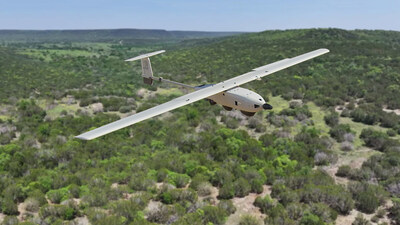
The test simulated multiple variations of fuel contingencies. Within seconds, the ground command-and-control (C2) system's AI analyzed the situation, generated re-plan options and displayed them to the operator. Once the operator selected a preferred option, the AI automatically reassigned the Stalker's mission tasks to the Alta X and commanded the Stalker to return to base. By letting the AI agent handle the unexpected contingency, the operator could resolve the problem quickly while staying focused on other critical mission duties.
The Stalker UAV contributed its mission data to a unified C2 node that also managed an Unmanned Ground Vehicle (UGV) in
"This demonstration proves AI can move from the lab to the battlefield, delivering a multitude of capabilities ranging from autonomous decision-making to rapid data flow between unmanned vehicles across air, ground and synthetic environments," said OJ Sanchez, vice president and general manager, Lockheed Martin Skunk Works. "By fusing AI‑enabled UAV replanning with UGV capabilities, we give warfighters the safety, speed and confidence they need to act first in contested environments."
The team also leveraged Lockheed Martin's STAR.SDK™ solution. As part of the STAR.OS™ constellation, STAR.SDK helps developers create and deploy AI services quickly and efficiently so they can focus on the mission at hand. STAR.SDK was used to connect the contingency application to a user interface, which enabled operators to interact with a chat assistant that provided re-tasking options. The STAR.OS solution enables different AI systems to work together seamlessly — including unmanned systems.
This demonstration marks Lockheed Martin's ongoing commitment to deliver autonomous capabilities and open architecture that expands multi‑domain integration and empowers America's warfighters and allies.
For additional information, visit our website: https://www.lockheedmartin.com/en-us/capabilities/multi-domain-operations.html
About Lockheed Martin
Lockheed Martin is a global defense technology company driving innovation and advancing scientific discovery. Our all-domain mission solutions and 21st Century Security® vision accelerate the delivery of transformative technologies to ensure those we serve always stay ahead of ready. More information at Lockheedmartin.com.

 View original content to download multimedia:https://www.prnewswire.com/news-releases/lockheed-martin-skunk-works-showcases-aidriven-missioncontingency-management-on-an-autonomous-uav-demonstration-302631517.html
SOURCE Lockheed Martin Aeronautics