
STOCK TITAN

TI brings intelligence to battery management systems with industry's highest-cell-count EIS-enabled battery monitor

(Neutral)
(Neutral)
Tags

Texas Instruments (Nasdaq: TXN) introduced the BQ79826Z-Q1, an EIS-enabled battery monitor for electric vehicles and energy storage systems, supporting up to 26 cells per device. The chip enables early fault detection inside cells, improves state-of-charge accuracy, reduces component count and cost, and targets safer, longer-lasting batteries.

Loading...
Loading translation...

AI-generated analysis. How Rhea-AI works. Not financial advice.

Positive

  • None.

Negative

  • None.

News Market Reaction – TXN

-1.02%
-1.02% News Effect

On the day this news was published, TXN declined 1.02%, reflecting a mild negative market reaction.

Data tracked by StockTitan Argus on the day of publication.

Market Context

This announcement highlights Texas Instruments’ push deeper into EV and energy storage with the BQ79...
Analysis

This announcement highlights Texas Instruments’ push deeper into EV and energy storage with the BQ79826Z‑Q1, supporting up to 26 cells per device and integrating EIS-based diagnostics. In recent months, the company has paired strong Q1 2026 results and a $1.42 dividend with ongoing product innovation. Investors may watch adoption in automotive and ESS designs, subsequent financial updates, and any follow-on design-win disclosures to gauge the commercial impact of this higher-channel battery monitor.

Key Figures

Cells per device: 26 cells Additional channels: 44% more channels Advantage vs competitors: 8 more cells +5 more
8 metrics
Cells per device 26 cells BQ79826Z-Q1 supports up to 26 cells in series
Additional channels 44% more channels Single chip tracks 44% more channels than previous generations
Advantage vs competitors 8 more cells Supports eight more cells per device than competing solutions
Voltage accuracy <2 mV Voltage accuracy across –40°C to +125°C range
Temperature range –40°C to +125°C Operating temperature range for BQ78926Z-Q1 accuracy spec
EIS speed 5x faster EIS measurement time vs previous solutions
Onboard charger power 11 kW Single-stage bidirectional onboard charger reference design
Transformer rating 50 kVA Solid-state transformer cell stack power rating

Historical Context

5 past events · Latest: Jun 02 (Neutral)
Pattern 5 events
Date Event Sentiment 24h Move Catalyst
Jun 02 CFO transition Neutral +0.1% Announced appointment of new CFO effective August 1, 2026.
May 11 Investor conference Neutral +3.5% CEO scheduled to speak at Bernstein Strategic Decisions Conference.
Apr 28 Product launch Positive -1.7% Launch of TI-84 Evo graphing calculator with performance improvements.
Apr 22 Earnings report Positive +19.4% Q1 2026 revenue and EPS growth led by industrial and data center.
Apr 16 Dividend declaration Positive +3.0% Board declared quarterly dividend of $1.42 per share for Q2 2026.

24h Move is the share-price change in the day after each event; other market factors may also have contributed.

Pattern Detected

Stock has tended to react positively to major financial updates and capital return news, with mixed responses to product launches.

Recent Company History

Over the last few months, Texas Instruments reported strong Q1 2026 results on Apr 22 with revenue of $4.83 billion and EPS of $1.68, which correlated with a 19.43% gain. A quarterly dividend declaration on Apr 16 and an upcoming CEO conference appearance on May 28 also coincided with positive moves. A calculator product launch on Apr 28 saw a modest decline. Today’s battery-monitor announcement fits TI’s ongoing emphasis on power, industrial and automotive applications.

Key Terms

electrochemical impedance spectroscopy, eis, thermal runaway, state of charge, +3 more
7 terms
electrochemical impedance spectroscopy medical
"highest-cell-count battery monitor with an integrated electrochemical impedance spectroscopy (EIS) engine"
Electrochemical impedance spectroscopy is a laboratory method that measures how an electrochemical system (such as a battery, fuel cell or sensor) resists and stores electrical current across a range of frequencies, revealing underlying processes like charge transfer, material degradation or reaction speed. Investors pay attention because it gives early, detailed insight into a device’s health, lifespan and efficiency—like listening to engine sounds to diagnose wear—helping assess product reliability and commercial prospects.
eis medical
"Integrated smart EIS engine enables early warning of thermal runaway"
The Enterprise Investment Scheme (EIS) is a UK tax program that gives individuals tax breaks for investing in small, early-stage private companies, reducing risk much like a rebate on a risky purchase. For investors, EIS can improve potential after-tax returns and encourage backing startups that might otherwise be too risky, while companies get easier access to growth capital because investors receive these incentives.
thermal runaway technical
"enables early warning of thermal runaway from inside battery cells"
Thermal runaway is an uncontrolled, accelerating rise in temperature inside batteries, chemical systems, or equipment where heat being produced exceeds the system’s ability to shed it, often leading to fire, explosion, or permanent damage. Investors care because it creates safety recalls, regulatory scrutiny, liability and production stoppages that can sharply hurt a company’s finances and reputation — like a small spark that rapidly becomes a larger, costly disaster.
state of charge technical
"visibility into the state of charge and state of health of each battery cell"
A battery’s state of charge is the measured amount of usable electrical energy remaining, usually shown as a percentage of full capacity — like a fuel gauge for a battery. Investors watch it because it directly affects how long devices, vehicles, or storage systems can operate between charges, influences maintenance and replacement schedules, and therefore impacts product performance, operating costs and the revenue potential of companies that make or rely on battery-powered systems.
automotive safety integrity level d regulatory
"Compliance with Automotive Safety Integrity Level D and International Organization for Standardization 26262"
Automotive Safety Integrity Level D is the highest safety classification under the international vehicle functional-safety standard, used to rate how likely a malfunction in a car system could lead to serious injury or death. It signals that the system requires the strictest design, testing and documentation controls—like spending far more time and checks on a brake system than on a radio—so investors know the product will carry higher development costs, longer timelines and lower tolerance for defects or recalls.
international organization for standardization 26262 regulatory
"Automotive Safety Integrity Level D and International Organization for Standardization 26262"
A technical standard that sets rules for designing and testing vehicle electrical and electronic systems to ensure they behave safely even when parts fail — think of it as a seatbelt and checklist for car electronics. Investors care because meeting this standard affects how quickly a vehicle or component can reach the market, the cost of development and recalls, and the legal and reputational risks tied to product safety.
solid-state transformer technical
"a 50kVA solid-state transformer cell stack with Ethernet and Fast Serial Interface communication"
A solid-state transformer is an electrical device that performs the same job as a traditional transformer—changing voltage and isolating circuits—but does so with fast-switching electronics instead of large coils of wire and oil-filled tanks. It can be smaller, more efficient, provide finer control over how power is delivered or routed, and enable features like two-way power flow and built-in monitoring. For investors, that means companies making or deploying them could benefit from spending on grid upgrades, electric vehicle charging, renewable integration, and smarter infrastructure, similar to how upgrading from a mechanical gearbox to a digital controller unlocks new capabilities.

AI-generated analysis. How Rhea-AI works. Not financial advice.

See more from StockTitan in Google Search and AI answers. Adds StockTitan as a preferred source · opens Google
Add on Google

 Engineers can build safer, higher-performing electric vehicles and energy storage systems with TI's new BQ79826Z-Q1 battery monitor

News highlights:

  • The industry's first 26-cells-in-series channel battery monitor delivers best-in-class sensing accuracy, reducing system costs by supporting more cells per device than competing solutions.
  • Integrated smart EIS engine enables early warning of thermal runaway from inside battery cells, helping ensure safety in EVs and ESSs.
  • Designed to help engineers create safer, higher-performing automotive and industrial applications, the BQ79826Z-Q1 is the latest addition to TI's portfolio of BMS devices.
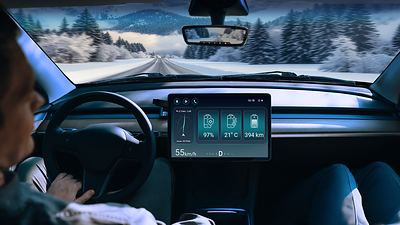
DALLAS, June 9, 2026 /PRNewswire/ -- Texas Instruments (TI) (Nasdaq: TXN) today introduced the industry's highest-cell-count battery monitor with an integrated electrochemical impedance spectroscopy (EIS) engine, bringing predictive intelligence, comprehensive data and real-time diagnostics to battery monitoring in electric vehicles (EV) and energy storage system (ESS) applications.

TI’s new BQ79826Z-Q1 battery monitor enables increased safety and performance in EVs and ESSs.

The BQ79826Z-Q1 battery monitor enhances safety and extends battery life by detecting potential failures from within battery cells. The single chip delivers the highest-cell-count monitoring in its class, tracking up to 44% more channels than previous generations. With this increase in channels, the device significantly decreases the number of components required in a battery pack, reducing system complexity and cost without compromising reliability. TI is showcasing this innovation at the 2026 Power Conversion, Intelligent Motion Expo and Conference (PCIM), June 9-11, in Nuremberg, Germany.

"The electrification of transportation and the rapid expansion of energy storage are redefining what battery performance must deliver, and as a leader in battery management technology, TI is uniquely positioned to meet that challenge," said Wenjia Liu, vice president and general manager, battery management systems (BMS) at TI. "Our high-cell-count battery monitor with a built-in EIS engine helps 'shine a light' inside battery cells, delivering rich chemical-state data that enables systems' software to make informed, real-time decisions on safety and performance of the battery pack, allowing engineers to address the most critical challenges in battery management."

For more information, see ti.com/BQ79826Z-Q1.

Delivering safety and performance with EIS technology
Just as an electrocardiogram (EKG) monitors the heart, EIS monitors a battery. It delivers continuous, real-time insight that reveals the battery's health and warns of issues before they become critical. Integrated EIS technology enables the BQ78926Z-Q1 to detect fault conditions earlier – from inside the cells – helping maintain safety and notifying passengers of potential vehicle hazards such as thermal runaway.

These same benefits extend to ESSs, where reliable battery monitoring is critical to meeting the growing power demands of artificial intelligence data centers. As effective storage solutions become increasingly vital in the grid-to-gate ecosystem, EIS gives engineers real-time visibility into the state of charge and state of health of each battery cell, regardless of system size.

Maximizing efficiency with industry-leading cell count
The performance of an EV or ESS is fundamentally affected by the quality and efficiency of its batteries. The BQ79826Z-Q1 supports up to 26 cells per device, eight more than any competing solution, setting a new industry standard. Fewer monitoring devices means a lower bill of materials, simplified architecture and reduced board space requirements, translating to meaningful cost savings per channel without sacrificing quality or reliability.

When paired with the BQ79881-Q1 pack monitor and optional TI communications bridge, these devices create a powerful chipset that works across different module sizes, battery chemistries and mechanical designs, giving engineers the flexibility to design once and deploy everywhere. This scalability reduces engineering overhead and accelerates time to market for automotive and energy storage designers.

Calculating charge readings with the best-in-class accuracy
With a voltage accuracy of <2mV across a full temperature range of –40°C to +125°C, higher resolution analog-to-digital converters and ultra-low noise, the BQ78926Z-Q1 enables more accurate state-of-charge calculations, directly addressing one of the biggest concerns for EV drivers: range anxiety. Utilizing EIS technology, this device enables more accurate temperature and state-of-charge estimation, helping designers achieve longer battery life and faster charging without compromising battery health. With an EIS measurement time that is five times faster than previous solutions, this device delivers the highest functional safety voltage reading per cell. Compliance with Automotive Safety Integrity Level D and International Organization for Standardization 26262 gives designers a smarter, more efficient path to safer, longer-lasting batteries.

For more information on the BQ79826Z-Q1, see technical article "Enabling the next phase of battery intelligence."

Innovating what's next in power at PCIM 2026
Visitors to PCIM can see new products and solutions from TI that are enabling engineers to innovate what's next in power in Hall 7, Booth No. 652. The new BQ79826Z-Q1 battery monitor will be featured in an EIS-enabled BMS reference design, alongside other innovations such as an 11kW single-stage bidirectional onboard charger, a 50kVA solid-state transformer cell stack with Ethernet and Fast Serial Interface communication and short-circuit protection for silicon carbide power metal-oxide semiconductor field-effect transistors with technology from Flex.

For more information about TI at PCIM, see ti.com/pcim.

Availability

  • Preproduction quantities of the BQ79826Z-Q1 battery monitor with integrated EIS engine are now available on TI.com, with production quantities expected by the end of 2026.
  • To support designers, complete development support including evaluation modules and reference designs are available.

About Texas Instruments
Texas Instruments Incorporated (Nasdaq: TXN) is a global semiconductor company that designs, manufactures and sells analog and embedded processing chips for markets such as industrial, automotive, data center, personal electronics and communications equipment. At our core, we have a passion to create a better world by making electronics more affordable through semiconductors. This passion is alive today as each generation of innovation builds upon the last to make our technology more reliable, more affordable and lower power, making it possible for semiconductors to go into electronics everywhere. Learn more at TI.com.

Texas Instruments Logo. (PRNewsFoto/Texas Instruments Incorporated)

Cision View original content to download multimedia:https://www.prnewswire.com/news-releases/ti-brings-intelligence-to-battery-management-systems-with-industrys-highest-cell-count-eis-enabled-battery-monitor-302792068.html

SOURCE Texas Instruments

FAQ

What did Texas Instruments (TXN) announce on June 9, 2026 about the BQ79826Z-Q1 battery monitor?

Texas Instruments announced the BQ79826Z-Q1, a high-cell-count battery monitor with integrated EIS for EV and energy storage safety. According to Texas Instruments, it adds predictive intelligence, real-time diagnostics, and supports up to 26 cells to reduce system complexity and cost.

How many cells does the TI BQ79826Z-Q1 battery monitor support, and why is this important for EVs?

The BQ79826Z-Q1 supports up to 26 cells per device, eight more than competing solutions. According to Texas Instruments, this higher cell count cuts required devices, simplifies battery-pack architecture, reduces board space and bill-of-materials cost, while maintaining reliability for electric vehicle performance and safety.

What is electrochemical impedance spectroscopy (EIS) in TI's BQ79826Z-Q1, and how does it enhance battery safety?

EIS in the BQ79826Z-Q1 continuously monitors battery health and detects faults from inside cells. According to Texas Instruments, this real-time insight helps provide early warning of conditions like thermal runaway, improving safety for electric vehicles and energy storage systems across different system sizes.

How does the TI BQ79826Z-Q1 improve state-of-charge accuracy and address EV range anxiety?

The BQ79826Z-Q1 offers voltage accuracy of <2mV from –40°C to +125°C with low noise. According to Texas Instruments, this precision, combined with EIS-based measurements, enables more accurate state-of-charge estimation, supporting longer battery life, faster charging, and addressing electric vehicle driver range concerns.

When will the TI BQ79826Z-Q1 EIS-enabled battery monitor be commercially available to designers?

Preproduction quantities of the BQ79826Z-Q1 are currently available on TI.com for evaluation and design work. According to Texas Instruments, production quantities are expected by the end of 2026, with supporting evaluation modules and reference designs already offered to assist engineers.

How does the TI BQ79826Z-Q1 support energy storage systems for AI data centers and grid applications?

The BQ79826Z-Q1 brings real-time EIS-based visibility into cell state-of-charge and health in energy storage systems. According to Texas Instruments, this reliable monitoring is critical for meeting growing power demands of AI data centers and grid-to-gate storage, regardless of system size or chemistry.
