
Stryker launches SmartHospital Platform
Rhea-AI Summary
Stryker (NYSE:SYK) launched the SmartHospital Platform on March 9, 2026, a digital foundation to connect devices, data and care teams into one adaptive hospital ecosystem.
Key features include connected infrastructure, clinical communication (Sync Badge), the Engage workflow engine, virtual care and ambient intelligence to streamline operations and support bedside staff.
Positive
- None.
Negative
- None.
News Market Reaction – SYK
On the day this news was published, SYK gained 0.37%, reflecting a mild positive market reaction.
Data tracked by StockTitan Argus on the day of publication.
Market Reality Check
Peers on Argus
SYK is down 1.6% with mixed peer moves: BSX -2.22%, MDT -1.73%, EW -1.64%, ABT -0.88%, while ZBH is up 1.18%. With no peers in the momentum scanner and no same-day peer headlines, the reaction appears more stock-specific than part of a coordinated sector rotation.
Historical Context
| Date | Event | Sentiment | Move | Catalyst |
|---|---|---|---|---|
| Mar 03 | Ortho innovation showcase | Positive | -0.6% | Highlighted new orthopaedic products and robotics at the AAOS 2026 meeting. |
| Feb 24 | Device launch | Positive | -0.9% | Launched Synchfix EVT, expanding flexible syndesmotic fixation options and winning a design award. |
| Feb 11 | Fracture system launch | Positive | +0.7% | Introduced T2 Alpha Humerus Nailing System to support complex fracture care and workflow. |
| Feb 09 | Robotics expansion | Positive | -0.6% | Announced limited market release of Mako RPS handheld robotics for total knee procedures. |
| Feb 04 | Dividend declaration | Positive | -0.0% | Declared $0.88 quarterly dividend, a 4.8% year-over-year increase in shareholder payouts. |
Recent product and dividend announcements have mostly seen mild negative or flat next-day moves, even when the news was operationally positive.
Over the past months, Stryker has steadily expanded its portfolio with multiple product launches, including Mako Handheld Robotics, the T2 Alpha Humerus Nailing System, and Synchfix EVT, alongside innovation showcases at AAOS 2026. A quarterly dividend of $0.88 per share with a 4.8% year-over-year increase underscored capital return. Despite these largely positive updates, next-day price reactions were modest and often slightly negative, indicating that the market has treated such announcements as incremental rather than major re-rating catalysts. Today’s SmartHospital Platform launch fits this pattern of ongoing innovation.
Market Pulse Summary
This announcement introduces Stryker’s SmartHospital Platform, a digital foundation that connects devices, data and care teams to streamline workflows, clinical communication, virtual care and ambient intelligence. It follows a series of new product launches and innovation showcases in early 2026, reinforcing a pattern of incremental, innovation-focused updates. Investors may watch for adoption metrics, hospital and health system partnerships, and how this platform complements prior robotics and MedSurg investments outlined in recent filings.
Key Terms
middleware technical
virtual care technical
virtual nursing technical
computer vision technical
ambient intelligence technical
ai technical
AI-generated analysis. Not financial advice.


New platform connects devices, data and care teams across the patient journey to streamline operations and enhance outcomes for patients and staff
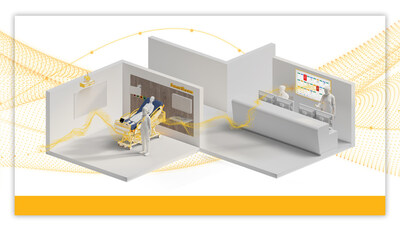
The SmartHospital Platform is being led by Stryker's new Smart Care business, established to advance the company's ongoing commitment to supporting their customers' digital transformations. Built to help address today's healthcare challenges, including system fragmentation, staff overload and high patient volumes, the SmartHospital Platform scales to support the unique needs of hospitals and health systems, surfacing relevant insights to inform clinical decisions and enhance workflow efficiency.
"We are dedicated to partnering with our customers on their digital journeys to help elevate care delivery," said Scott Sagehorn, VP/GM of Smart Care at Stryker. "The SmartHospital Platform is designed to evolve alongside health systems so teams can work more efficiently and stay focused on patient-centered care."
Key capabilities of the SmartHospital Platform include:
- Connected infrastructure: The platform connects devices and data to support clinical and operational workflows across transport, treatment and recovery, helping teams better coordinate patient care.
- Clinical communication: Voice-activated, hands-free communication devices such as Stryker's Sync Badge give teams critical information and prioritized alarms to support timely, coordinated care delivery across the hospital.
- Workflow engine: Engage, the intelligent middleware engine behind the SmartHospital Platform, helps reduce communication silos by filtering and prioritizing alarms and notifications so staff can stay informed across busy care settings.
- Virtual care: Virtual nursing and virtual monitoring workflows help support bedside staff by streamlining administrative tasks and empowering them to stay focused on the patient experience.
- Ambient intelligence: Ambient sensors, computer vision, AI and contextual data help the care environment become more aware, adaptive and responsive.
"Launching the SmartHospital Platform is an important step forward in supporting our customers as they transform care delivery," said Jessica Mathieson, president of Medical at Stryker. "We remain focused on solving problems, helping nurses and staff spend less time navigating complexity and more time with patients."
About Stryker
Stryker is a global leader in medical technologies and, together with our customers, we are driven to make healthcare better. We offer innovative products and services in MedSurg, Neurotechnology and Orthopaedics that help improve patient and healthcare outcomes. Alongside our customers around the world, we impact more than 150 million patients annually. More information is available at www.stryker.com.
To learn more about the SmartHospital Platform, visit stryker.com/smarthospitalplatform
Media contact
Stryker
Jenny Braga
Senior Director, External Affairs
jenny.braga@stryker.com

 View original content to download multimedia:https://www.prnewswire.com/news-releases/stryker-launches-smarthospital-platform-302707076.html
SOURCE Stryker