
TransCode Therapeutics Successfully Completes Phase 1a Clinical Trial, Reports Safety and Stabilization Data for TTX-MC138 in Metastatic Cancer
Rhea-AI Summary
TransCode Therapeutics (NASDAQ: RNAZ) reported final Phase 1a data for TTX-MC138 in metastatic cancer. The dose-escalation trial met its primary safety endpoint with no dose-limiting toxicities across 16 patients and 86 doses up to 4.8mg/kg.
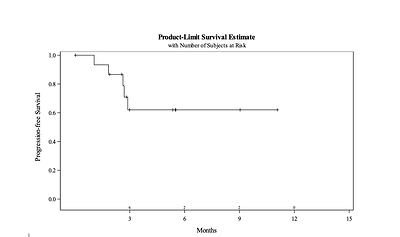
Median treatment lasted 11.3 weeks; three patients remain on therapy. At least 9 of 14 evaluable patients (64%) achieved stable disease lasting six months based on RECIST criteria. TransCode selected 4.8mg/kg as the recommended Phase 2a dose and is advancing TTX-MC138 into a Phase 2a trial in ctDNA-positive colorectal cancer after curative-intent therapy.
AI-generated analysis. Not financial advice.
Positive
- Primary safety endpoint met with no dose-limiting toxicities in 16 patients across four dose levels up to 4.8mg/kg
- Median treatment duration of 11.3 weeks, with some patients treated for up to 52.4 weeks (20 cycles)
- 9 of 14 evaluable patients (64%) achieved stable disease lasting six months under RECIST criteria
- Three metastatic cancer patients remain on TTX-MC138 treatment at 21, 16 and 14 cycles
- Recommended Phase 2a dose established at 4.8mg/kg for TTX-MC138
- Pharmacokinetics show drug bioavailability consistent with earlier preclinical studies
- Individual metastatic thyroid cancer patient showed dramatic thyroglobulin decrease and 12 months of stable disease
Negative
- None.
News Market Reaction – RNAZ
On the day this news was published, RNAZ declined 4.64%, reflecting a moderate negative market reaction. Argus tracked a peak move of +31.3% during that session. Argus tracked a trough of -35.3% from its starting point during tracking. Our momentum scanner triggered 23 alerts that day, indicating elevated trading interest and price volatility. This price movement removed approximately $277K from the company's valuation, bringing the market cap to $5.69M at that time. Trading volume was exceptionally heavy at 53.8x the daily average, suggesting significant selling pressure.
Data tracked by StockTitan Argus on the day of publication.
Key Figures
Market Reality Check
Peers on Argus
RNAZ was down 2.76% with multiple biotech peers also weak; momentum scanner shows AEON -3.01%, DWTX -8.98%, and PCSA -2.74% all moving down together.
Previous Clinical trial Reports
| Date | Event | Sentiment | Move | Catalyst |
|---|---|---|---|---|
| May 27 | Phase 2a initiation | Positive | -5.6% | Started Phase 2a trial of TTX‑MC138 in ctDNA‑positive colorectal cancer. |
| Feb 05 | IND amendment filed | Positive | +16.2% | Submitted IND amendment for planned Phase 2a TTX‑MC138 colorectal cancer trial. |
| Dec 11 | Phase 2a collaboration | Positive | +20.7% | Announced PRE‑I‑SPY Phase 2a expansion with TTX‑MC138 after positive Phase 1 signals. |
| May 08 | Cohort 4 dosing | Positive | -1.4% | Completed initial dosing in Phase 1a Cohort 4 with no dose‑limiting toxicities. |
| May 01 | Phase 1a progress | Positive | +38.7% | Reported further Phase 1a progress and stable disease in metastatic cancer patients. |
Clinical-trial updates for TTX-MC138 have often triggered large moves, mostly positive, but with several instances where positive data coincided with short-term declines.
Over the past year, TransCode has repeatedly highlighted progress for TTX‑MC138, from Phase 1a safety and durability signals to multiple announcements around a PRE‑I‑SPY Phase 2a colorectal cancer trial. Prior clinical‑trial press releases on 2025‑05‑01 and 2025‑05‑08 emphasized absence of dose‑limiting toxicities and sustained stable disease, while later updates in 2025‑12‑11 and 2026‑02‑05 focused on expanding into Phase 2a. The current Phase 1a completion and durability data build directly on this safety-and-efficacy narrative.
Historical Comparison
Clinical-trial headlines for TTX‑MC138 have produced an average move of 13.73%. Today’s Phase 1a completion and durability update fits this pattern of data-driven volatility, though the immediate reaction was more muted and slightly negative.
Historical clinical-trial releases show a clear path from early Phase 1a safety and target engagement to Phase 2a dose-expansion with PRE‑I‑SPY, with TTX‑MC138 consistently framed around durable disease control and miR‑10b targeting.
Regulatory & Risk Context
An effective S-3 shelf dated 2026-04-30 covers resale of up to 15,955,543 common shares by existing holders. The company states it is not selling shares under this registration and will not receive proceeds from these resales.
Market Pulse Summary
This announcement detailed completion of a Phase 1a trial for TTX‑MC138 with no dose‑limiting toxicities and a 64% six‑month stable disease rate in evaluable patients, supporting advancement into Phase 2a. These data extend a multi‑year narrative of safety and durability signals in metastatic settings. At the same time, investors may weigh this progress against recent listing‑compliance challenges, equity facilities, and an effective resale shelf when assessing overall risk.
Key Terms
dose-limiting toxicities medical
circulating tumor DNA (ctDNA) medical
Response Evaluation Criteria in Solid Tumors (RECIST) medical
pharmacokinetics medical
thyroglobulin medical
tumor marker medical
microRNA-10b medical
ctDNA positive medical
AI-generated analysis. Not financial advice.


TransCode reports no dose-limiting toxicities, durable disease stabilization in metastatic patients; advances to Phase 2 development in ctDNA-positive cancers using next-generation RNA therapeutics.
TTX-MC138 has been administered to 16 patients who received 86 doses. The median treatment duration was 11.3 weeks, with a range of four to 52.4 weeks, representing 2 to 20 cycles of treatment.
Notably, three patients remain on trial, and continue to receive TTX-MC138. One patient is at 21 cycles of treatment, another is at 16 cycles, and the third one is at 14 cycles of treatment. (Table 1)
Table 1: Trial demographics, met safety primary endpoint | |||
Cohort | Dose | Number of Patients | DLT's1 |
1 | 0.8mg/kg | 3 | 0 |
23 | 1.6mg/kg | 3 | 0 |
33 | 3.2mg/kg2 | 7 | 0 |
43 | 4.8mg/kg | 3 | 0 |
1 No significant treatment-related safety events or dose limiting toxicities were observed. | |||
TransCode believes these results support its selection of the recommended Phase 2a dose (RP2D) of 4.8mg/kg.
In addition, the assessment of the trial patient population underscored the potential for durable disease control in participants with metastatic cancer.
Based on Response Evaluation Criteria in Solid Tumors (RECIST) standardized criteria to measure tumor response to treatment using imaging to categorize lesions and assess changes in size over time, 9 out of 14 (
"From a clinical perspective, it is quite encouraging to see how well tolerated this agent has been at the exposures achieved through the Phase 1a dose-escalation study, without any dose-limiting toxicities. That, combined with the observation of disease stabilization in a population with such advanced disease supports continued clinical development" noted Keith Flaherty, MD, Director of Clinical Research at the Massachusetts General Hospital Cancer Center, Professor of Medicine at Harvard Medical School and TransCode's Advisory Board member.
The pharmacokinetics profile from the analysis of plasma from patients receiving TTX-MC138 demonstrated evidence of drug bioavailability consistent with earlier preclinical studies.
One patient diagnosed with metastatic thyroid cancer was noted to have a dramatic decrease in their thyroglobulin levels, a tumor marker associated with cancer progression. The patient has now had demonstrated stable disease for the last 12 months and is one of the three patients who remain on study. We believe that the patient's continued participation in the study, together with the decline in their thyroglobulin levels, provides further evidence of therapeutic activity from TTX-MC138.
A clinical study report is in process. Several presentations are planned at future scientific congresses.
"As the safety and tolerability primary objectives of the trial were met, the encouraging rates of disease stabilization provide the rationale to advance TTX-MC138 clinical development in our recently initiated Phase 2a trial. We continue to believe that TTX-MC138 may offer a promising therapeutic option, if approved, for patients with metastatic disease who have limited treatment alternatives," said Daniel Vlock, MD, TransCode Consulting Clinician.
Further information about the trial is available at www.clinicaltrials.gov, (NCT Identifier: NCT06260774).
About TTX-MC138
TTX-MC138 is a first-in-class therapeutic candidate designed to inhibit microRNA-10b (miR-10b), a microRNA widely believed to be critical to the emergence and progression of many metastatic cancers. TransCode's Phase 0 clinical trial produced evidence of delivery of a radiolabeled version of TTX-MC138 to metastatic lesions.
About TransCode Therapeutics
TransCode Therapeutics is an immuno-oncology and targeted cancer therapy company with a focus on treating advanced malignancy. The Company's lead therapeutic candidate, TTX-MC138, is focused on treating metastatic tumors that overexpress microRNA-10b, a unique, well-documented biomarker of metastasis. In addition, TransCode has a portfolio of other first-in-class therapeutic candidates designed to mobilize the immune system to recognize and destroy cancer cells.
Forward-Looking Statements
This release contains "forward-looking statements" within the meaning of the Private Securities Litigation Reform Act of 1995, including, without limitation, statements concerning the timing, conduct and results of TransCode's Phase 1a and Phase 2a clinical trials, statements about microRNAs and their involvement in cancer, and statements concerning the therapeutic potential of TransCode's TTX-MC138 and other therapeutic candidates. Any forward-looking statements in this press release are based on management's current expectations of future events and are subject to a number of risks and uncertainties that could cause actual results to differ materially and adversely from those set forth in or implied by such forward-looking statements. These risks and uncertainties include, but are not limited to: the risks associated with drug discovery and development; the risk that the results of clinical trials will not be consistent with TransCode's preclinical studies or expectations or with results from previous clinical trials; risks associated with the conduct of clinical trials; risks associated with TransCode's financial condition and its need to obtain additional funding to support its business activities, including TransCode's ability to continue as a going concern; risks associated with the timing and outcome of TransCode's planned regulatory submissions; risks associated with obtaining, maintaining and protecting intellectual property; risks associated with TransCode's ability to enforce its patents against infringers and defend its patent portfolio against challenges from third parties; risks of competition from other companies developing products for similar uses; risks associated with TransCode's dependence on third parties; and risks associated with geopolitical events and pandemics. For a discussion of these and other risks and uncertainties, and other important factors, any of which could cause TransCode's actual results to differ from those contained in or implied by the forward-looking statements, see the section entitled "Risk Factors" in TransCode's Annual Report on Form 10-K for the year ended December 31, 2025, as well as discussions of potential risks, uncertainties and other important factors in any subsequent TransCode filings with the U.S. Securities and Exchange Commission. All information in this press release is as of the date of this release; TransCode undertakes no duty to update this information unless required by law.

 View original content to download multimedia:https://www.prnewswire.com/news-releases/transcode-therapeutics-successfully-completes-phase-1a-clinical-trial-reports-safety-and-stabilization-data-for-ttx-mc138-in-metastatic-cancer-302789380.html
SOURCE TransCode Therapeutics, Inc.