
NANO Nuclear’s KRONOS MMR™ Microreactor Advances to Critical Milestone Toward Reactor Deployment with the University of Illinois Urbana-Champaign Submission of a Construction Permit Application to the U.S. Nuclear Regulatory Commission
Rhea-AI Summary
NANO Nuclear Energy (NASDAQ: NNE) announced that a Construction Permit Application (CPA) for its KRONOS MMR™ microreactor was submitted to the U.S. Nuclear Regulatory Commission on April 2, 2026, via the University of Illinois Urbana-Champaign partnership.
The filing marks a critical licensing milestone toward campus construction, with the company estimating the NRC formal review to take approximately 12 months. The company also plans a reduced-scale non-nuclear demonstration unit at its Oak Brook facility.
Positive
- CPA submission to NRC for KRONOS MMR™
- NRC formal review estimated ~12 months
- Partnered with University of Illinois for site deployment
- Planned reduced-scale non-nuclear demo unit in Oak Brook
- Positioned among few developers at CPA stage
Negative
- Construction authorization contingent on NRC acceptance and review
- Commercial deployment remains years away pending licensing
News Market Reaction – NNE
On the day this news was published, NNE gained 4.80%, reflecting a moderate positive market reaction. Argus tracked a peak move of +3.6% during that session. Our momentum scanner triggered 16 alerts that day, indicating notable trading interest and price volatility. This price movement added approximately $52M to the company's valuation, bringing the market cap to $1.14B at that time.
Data tracked by StockTitan Argus on the day of publication.
Key Figures
Market Reality Check
Peers on Argus
NNE slipped 0.39% while key peers like TNC (+3.69%), HLIO (+4.07%), THR (+1.73%) and GRC (+1.67%) rose, indicating a stock-specific reaction rather than a sector move.
Historical Context
| Date | Event | Sentiment | Move | Catalyst |
|---|---|---|---|---|
| Mar 17 | Investor conferences | Positive | -1.3% | Participation in multiple March 2026 energy and investor conferences and panels. |
| Mar 16 | Technology development | Positive | -6.4% | Conceptual design milestone for proprietary HALEU transport package with logistics partner GNS. |
| Feb 24 | International MoU | Positive | +4.0% | MoU with EHC Investment to explore KRONOS MMR deployment in the UAE and Gulf markets. |
| Feb 20 | Leadership hire | Positive | -4.1% | Appointment of an international nuclear policy advisor to support global regulatory engagement. |
| Feb 17 | Earnings and update | Positive | -0.6% | Q1 FY2026 report with large cash balance and KRONOS MMR licensing and incentive updates. |
Recent company updates have generally been positive, yet 4 of the last 5 news events with constructive operational or financial developments saw negative next-day price reactions, indicating a pattern of divergence between fundamentals-driven news and short-term trading.
Over the past six weeks, NANO Nuclear has advanced its KRONOS MMR™ strategy through licensing, partnerships, and capital raises. On Feb 17, Q1 FY2026 results highlighted $577.5M in cash and progress toward U.S./Canadian licensing. Subsequent releases covered senior policy hiring, a UAE deployment MoU, HALEU transport design work, and investor conferences. Despite mostly constructive themes, price reactions were often negative, framing today’s CPA milestone within a volatile sentiment backdrop.
Regulatory & Risk Context
An effective S-3/A shelf dated 2026-03-09 allows Nano Nuclear Energy Inc. to offer up to $900,000,000 of securities, including a $400,000,000 at-the-market program. Recent 424B5 and 424B3 filings on 2026-03-13 indicate active utilization of this shelf structure.
Market Pulse Summary
This announcement highlights NANO Nuclear’s progression as KRONOS MMR™ moves into the Construction Permit Application phase with the U.S. Nuclear Regulatory Commission, a key step toward deployment on the University of Illinois campus. Historically, the company has paired such milestones with substantial capital access, including a $900,000,000 shelf and strong cash balances. Investors may watch the NRC’s estimated 12‑month review, further licensing steps, and any additional use of the $400,000,000 ATM program.
Key Terms
construction permit application regulatory
nuclear regulatory commission regulatory
microreactor technical
generation IV technical
AI-generated analysis. Not financial advice.


Critical milestone achieved on the pathway to commercial deployment as NANO Nuclear becomes one of only a handful of advanced reactor developers to reach Construction Permit Application stage, marking transition from concept to formal NRC licensable, build-ready system
NEW YORK, N.Y., April 02, 2026 (GLOBE NEWSWIRE) -- NANO Nuclear Energy Inc. (NASDAQ: NNE) (“NANO Nuclear” or the “Company”), a leading advanced nuclear energy and microreactor developer, today announced that a Construction Permit Application (CPA) has been submitted to the U.S. Nuclear Regulatory Commission (NRC) for its KRONOS MMR™ microreactor. The CPA was formally submitted by The Grainger College of Engineering at the University of Illinois Urbana-Champaign (U. of I.), NANO Nuclear’s partner for the KRONOS MMR™ deployment at the U. of I.
With this submission, NANO Nuclear becomes the first commercially-ready microreactor developer and the third commercially-ready Generation IV advanced reactor developer to submit a CPA, placing NANO Nuclear among a small group of advanced nuclear companies progressing toward commercial deployment.
The CPA submission represents the achievement of a critical milestone for the KRONOS MMR™ on the pathway from engineering design, to construction on the campus of the U. of I., to reactor licensing, to ultimate commercial deployment.
A Major Industry Filter: From Concept to Reality
The CPA represents one of the most consequential milestones in the nuclear reactor development lifecycle. Unlike early-stage conceptual work, a CPA requires:
- Advanced engineering and safety analysis
- Site-specific evaluation and environmental considerations
- Demonstration of compliance with NRC regulatory frameworks
- Extensive documentation developed through ongoing engagement with NRC staff
This process is not undertaken in isolation – developers typically engage in pre-application interactions and iterative feedback with the NRC, meaning that a CPA submission reflects years of technical refinement and regulatory alignment.
As a result, reaching this milestone is highly regarded across the industry as a key factor separating companies with viable reactor solutions from those with early-stage conceptual designs.
The preparation of a CPA represents the culmination of years of engineering development, thousands of pages of technical documentation, coordinated input across reactor design, safety analysis, environmental review, and regulatory compliance disciplines, and establishment of a viable supply chain. In NANO Nuclear’s partnership with the U. of I., the CPA submission builds on an extensive body of work developed through continuous engagement with the NRC, including completion of the readiness assessment, a voluntary but highly rigorous process aimed at ensuring a complete and high-quality application. Importantly, this iterative process reflects a high level of alignment with regulatory expectations and provides strong confidence in the application’s readiness for acceptance for docketing and formal NRC review.

Figure 1- Rendering of NANO Nuclear Energy’s KRONOS MMR™ Energy System on the U. of I. Campus.
Positioning NANO Nuclear Energy as an Industry Leader
By advancing to the CPA stage, NANO Nuclear is now firmly positioned as:
- An execution-focused microreactor developer
- A company progressing toward construction and demonstration of a commercially ready reactor over the next few years
- One of the few advanced reactor companies moving through formal NRC licensing
This milestone signals that the intellectual property protected KRONOS MMR™ reactor is no longer just a design, but an energy system being actively moved into construction, licensing, and eventual commercial deployment at scale.
Full-Scale Deployment Strategy Differentiation
Unlike many advanced reactor concepts focused on limited research and development demonstration, NANO Nuclear’s approach with the KRONOS MMR™ is centered on commercially ready, scalable systems designed for real-world applications from the outset.
NANO Nuclear believes the KRONOS MMR™ CPA submission represents one of the only full-scale, deployment-oriented reactor applications among its peer group, reflecting a strategy focused not just on proving technology, but on building repeatable, commercially viable systems. This approach directly supports NANO Nuclear’s broader vision of:
- Regulatory approval of a standardized commercial power reactor
- Standardized reactor manufacturing
- Fleet-scale rollout across multiple markets
Insights gained through the CPA process are expected to play a critical role in refining NANO Nuclear’s assembly, siting, and deployment strategies, enabling the Company to move efficiently through future licensing and through multi-unit deployment projects.
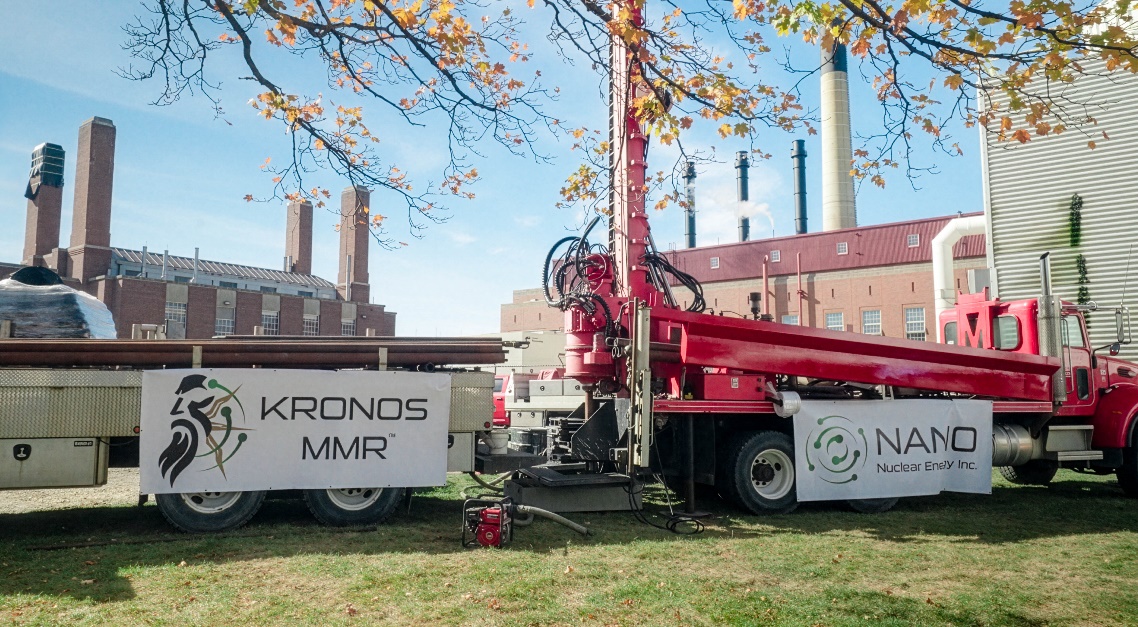
Figure 2 – NANO Nuclear Energy has completed site-characterization for its KRONOS MMR™ Energy System in partnership with the University of Illinois.
Leadership Commentary
Florent Heidet, Chief Technical Officer of NANO Nuclear Energy Inc., said: “Submitting the Construction Permit Application to the NRC is a defining moment for NANO Nuclear. This milestone represents years of engineering, regulatory engagement, and disciplined execution. It is where advanced nuclear projects begin to separate into those that are ready for execution and those still requiring significant R&D efforts.”
“We are now firmly on the path toward constructing, demonstrating, and ultimately deploying our reactor technology at scale. This is not just a step forward for NANO Nuclear – it is a step toward making advanced nuclear a commercial reality.”
Jay Yu, Founder and Chairman of NANO Nuclear Energy, added: “Reaching the CPA stage places NANO Nuclear in a small group of companies that are advancing toward commercial deployment at scale. This process demands a significant level of technical maturity, regulatory alignment, and operational readiness. It is a powerful validation of our technology and our strategy. With this milestone achieved, our engineering teams are now laser focused on building out a reduced-scaled KRONOS MMR™ non-nuclear engineering demonstration unit in our newly renovated Oak Brook, Illinois technical and demonstration facility.”
“What differentiates NANO Nuclear has been our focus from day one on scalable, commercial deployment. We are not building a science project - we are building a platform for widespread adoption of nuclear energy. The CPA submission brings us significantly closer to delivering on that vision.”
Caleb Brooks, Professor and Donald Biggar Willett Faculty Scholar of Nuclear, Plasma and Radiological Engineering at The Grainger College of Engineering, said: “Through every step of the process thus far, we at The Grainger College of Engineering have worked diligently alongside our partners at NANO Nuclear Energy to ensure our goals in constructing the first KRONOS micro modular reactor (MMR) on the university’s campus can become a reality. By submitting the Construction Permit Application to the NRC, we are taking the next step in signifying that the work will be done correctly and precisely. And we continue to look forward to the possibilities of what can become the most advanced nuclear research platform on any U.S. campus.”
Advancing Toward Licensing and Deployment
Following acceptance of the CPA for review, the NRC will begin its formal evaluation process, including safety and environmental assessments. Based on NANO Nuclear’s current understanding of the anticipated scope and review process, the company estimates the NRC formal review period to take approximately 12 months. The review period represents the next phase in NANO Nuclear’s journey toward:
- Construction authorization
- Reactor operation
- Commercial licensing
- Fleet-scale deployment at scale
Market Opportunity
With global demand for clean, reliable baseload power accelerating – driven by artificial intelligence, electrification, and industrial decarbonization – the timing of this milestone is particularly significant. Developers capable of navigating the regulatory process today are expected to be well-positioned to deploy reactors in the years to come. NANO Nuclear’s KRONOS MMR™ design advancement to the CPA stage signals not only technical maturity, but also the ability to move at the pace required to capture first-mover advantage in a rapidly tightening energy market.
About NANO Nuclear Energy Inc.
NANO Nuclear Energy Inc. (NASDAQ: NNE) is a North American advanced technology-driven nuclear energy company seeking to become a commercially focused, diversified, and vertically integrated company across five business lines: (i) cutting edge portable and other microreactor technologies, (ii) nuclear fuel fabrication, (iii) nuclear fuel transportation, (iv) nuclear applications for space and (v) nuclear industry consulting services. NANO Nuclear believes it is the first portable nuclear microreactor company to be listed publicly in the U.S.
Led by a world-class nuclear engineering team, NANO Nuclear’s reactor products in development include its lead project, the patented KRONOS MMR™ Energy System, a stationary high-temperature gas-cooled reactor that is now in construction permit regulatory engagement with the U.S. Nuclear Regulatory Commission (NRC) in collaboration with University of Illinois Urbana-Champaign (U. of I.), ZEUS™, a solid core battery reactor, and the space focused, portable LOKI MMR™, each representing advanced developments in clean energy solutions that are modular, on-demand capable, advanced nuclear microreactors.
Advanced Fuel Transportation Inc. (AFT), a NANO Nuclear subsidiary, is led by former executives from the largest transportation company in the world aiming to build a North American transportation company that will provide commercial quantities of HALEU fuel to small modular reactors, microreactor companies, national laboratories, military, and U.S. Department of Energy programs. Through NANO Nuclear, AFT is the exclusive licensee of a patented high-capacity HALEU fuel transportation basket developed by three major U.S. national nuclear laboratories and funded by the Department of Energy. Assuming development and commercialization, AFT is expected to form part of the only vertically integrated nuclear fuel business of its kind in North America.
HALEU Energy Fuel Inc. (HEF), a NANO Nuclear subsidiary, is focusing on the future development of a domestic source for a High-Assay, Low-Enriched Uranium (HALEU) fuel fabrication pipeline for NANO Nuclear’s own microreactors as well as the broader advanced nuclear reactor industry.
NANO Nuclear Space Inc. (NNS), a NANO Nuclear subsidiary, is exploring the potential commercial applications of NANO Nuclear’s developing micro nuclear reactor technology in space. NNS is focusing on applications such as the LOKI MMR™ system and other power systems for extraterrestrial projects and human sustaining environments, and potentially propulsion technology for long haul space missions. NNS’ initial focus will be on cis-lunar applications, referring to uses in the space region extending from Earth to the area surrounding the Moon's surface.
For more corporate information please visit: https://NanoNuclearEnergy.com/
For further NANO Nuclear information, please contact:
Email: IR@NANONuclearEnergy.com
Business Tel: (212) 634-9206
PLEASE FOLLOW OUR SOCIAL MEDIA PAGES HERE:
NANO Nuclear Energy LINKEDIN
NANO Nuclear Energy YOUTUBE
NANO Nuclear Energy X PLATFORM
About The Grainger College of Engineering
The Grainger College of Engineering at the University of Illinois Urbana-Champaign is one of the world's top-ranked institutions and a globally recognized leader in engineering and computing education, research and public engagement. With a diverse, tight-knit community of faculty, students and alumni, Grainger Engineering sets the standard for excellence in engineering and computing, driving innovation in the economy and bringing revolutionary ideas to the world. Through robust research and discovery, our faculty, staff, students and alumni are changing our world and making advances once only dreamed about, including the MRI, LED, ILIAC, Mosaic, YouTube, PayPal, flexible electronics, electric machinery, miniature batteries, imaging the black hole and flight on Mars. The world's brightest minds from The Grainger College of Engineering tackle today's toughest challenges. And they are building a better, cooler, safer tomorrow. Visit the Grainger Engineering website for more information.
Cautionary Note Regarding Forward Looking Statements
This news release and statements of NANO Nuclear’s management in connection with this news release contain or may contain “forward-looking statements” within the meaning of Section 21E of the Securities Exchange Act of 1934, as amended, and the Private Securities Litigation Reform Act of 1995. In this context, forward-looking statements mean statements related to future events, which may impact our expected future business and financial performance, and often contain words such as “expects”, “anticipates”, “intends”, “explore”, “aims,” “estimates”, “plans”, “believes”, “potential”, “eventual,” “goal,” “will”, “should”, “could”, “would” or “may” and other words of similar meaning. In this press release, forward-looking statements include those related to the anticipated benefits to the Company of the CPA submission and the timing for NRC review of the CPA, each as described herein. These and other forward-looking statements are based on information available to us as of the date of this news release and represent management's current views and assumptions. Forward-looking statements are not guarantees of future performance, events or results and involve significant known and unknown risks, uncertainties and other factors, which may be beyond our control. In addition, for NANO Nuclear, particular risks and uncertainties that could cause our actual future results to differ materially from those expressed in our forward-looking statements include but are not limited to the following: (i) risks related to our U.S. Department of Energy (“DOE”), U.S. Nuclear Regulatory Commission (“NRC”), Canadian Nuclear Safety Commission (“CNSC”) or related state or other U.S. or non-U.S nuclear licensing submissions, including the risk that the CPA described herein might not be approved on the timelines estimated, or at all, (ii) risks related the development of new or advanced technology and the acquisition of complementary technology or businesses, including difficulties with design and testing, cost overruns, regulatory delays, integration issues and the development of competitive technology, (iii) our ability to obtain contracts and funding to be able to continue operations, (iv) risks related to uncertainty regarding our ability to technologically develop and commercially deploy a competitive advanced nuclear reactor or other technology in the timelines we anticipate, if ever, (v) risks related to the impact of U.S. and non-U.S. government regulation, policies and licensing requirements, including by the DOE, and the NRC, including those associated with the recently enacted ADVANCE Act and the May 23, 2025 Executive Orders seeking to streamline nuclear regulation, (all of which may adversely impact the estimates of CPA review timing described herein), and (vi) similar risks and uncertainties associated with the operating a developing business a highly regulated, competitive and rapidly evolving industry, including that our plans may change and we may use our cash on hand faster or in different ways than anticipated as our business requires. Readers are cautioned not to place undue reliance on these forward-looking statements, which apply only as of the date of this news release. These factors may not constitute all factors that could cause actual results to differ from those discussed in any forward-looking statement, and NANO Nuclear therefore encourages investors to review other factors that may affect future results in its filings with the SEC, which are available for review at www.sec.gov and at https://ir.nanonuclearenergy.com/financial-information/sec-filings. Accordingly, forward-looking statements should not be relied upon as a predictor of actual results. We do not undertake to update our forward-looking statements to reflect events or circumstances that may arise after the date of this news release.
Attachment
