
Launched From Submarines, Trusted by 30 Navies: REMUS Marks 25 Years Beneath the Surface
Rhea-AI Summary
HII (NYSE: HII) celebrated the 25th anniversary of its REMUS unmanned underwater vehicle family on April 20, 2026, highlighting 750+ deliveries to over 30 nations and broad use in defense, commercial and scientific missions. The REMUS line includes variants from REMUS 130 to REMUS 6000 and REMUS 620 with up to 110 hours endurance and ~275 nautical mile range.
The company noted REMUS deployed from submarine torpedo tubes and continued partnerships to integrate REMUS with allied submarine and surface systems.
AI-generated analysis. Not financial advice.
Positive
- None.
Negative
- None.
News Market Reaction – HII
On the day this news was published, HII declined 0.66%, reflecting a mild negative market reaction.
Data tracked by StockTitan Argus on the day of publication.
Key Figures
Market Reality Check
Peers on Argus
HII slipped 0.34% while key defense peers were mixed: AVAV (-6.48%), KTOS (-5.89%), DRS (-1.42%), ERJ (-0.54%), and WWD (+0.83%). Moves are not clearly synchronized with HII.
Historical Context
| Date | Event | Sentiment | Move | Catalyst |
|---|---|---|---|---|
| Apr 16 | Expo participation update | Neutral | -0.5% | Previewed HII’s presence and demonstrations at Sea-Air-Space Expo 2026. |
| Apr 14 | Earnings call notice | Neutral | +0.9% | Announced timing and webcast details for Q1 2026 earnings call. |
| Apr 13 | Hedge Strategy briefing | Neutral | +0.0% | Media advisory on HII’s role in Navy hedge strategy and REMUS launch demo. |
| Apr 09 | Shipyard visit | Neutral | -1.9% | Hosted Navy leadership at Ingalls, highlighting >$1B infrastructure investment and programs. |
| Apr 06 | AI partnership MOU | Neutral | -1.3% | Teamed with GrayMatter Robotics to explore Physical AI in shipbuilding. |
Recent HII headlines around naval capability, shipbuilding, and conferences have produced modest single-day moves, with slight gains and losses clustering within a tight range.
Over the past few weeks, HII has highlighted investments and capabilities across shipbuilding, unmanned systems, and AI-enabled production. Events include showcasing its role at Sea-Air-Space (Apr 20–22), announcing an upcoming earnings call on May 5, 2026, briefing media on the Navy’s “Hedge Strategy,” and expanding AI partnerships for shipbuilding. Price reactions to these updates have been relatively muted, suggesting incremental sentiment shifts rather than major re-ratings.
Market Pulse Summary
This announcement underscores REMUS as a long-standing UUV franchise, with over 750 vehicles deployed in more than 30 nations and over 90% still active. It highlights recent milestones such as submarine-tube launch and the Lionfish program’s progression. Investors may track how these capabilities translate into future orders, integration with programs like ROMULUS, and continued adoption across NATO and Indo-Pacific partners.
Key Terms
unmanned underwater vehicle technical
uuv technical
autonomous underwater vehicle technical
intelligence, surveillance and reconnaissance technical
isr technical
other transaction authority regulatory
ota regulatory
AI-generated analysis. Not financial advice.


NATIONAL HARBOR, Md., April 20, 2026 (GLOBE NEWSWIRE) -- HII (NYSE: HII) today celebrated the 25th anniversary of the REMUS unmanned underwater vehicle (UUV) family during the 2026 Navy League Sea-Air-Space Exposition, marking a quarter century of innovation, reliability and mission versatility that has made REMUS the world’s leading autonomous underwater vehicle platform.
Originally funded by the Office of Naval Research (ONR) and developed by the Woods Hole Oceanographic Institution (WHOI) in Woods Hole, Massachusetts, REMUS began as a research vehicle designed to advance ocean science and undersea exploration. Over the past 25 years, HII has expanded that pioneering technology into the most widely produced and adopted autonomous unmanned underwater systems in the world, supporting defense, commercial and scientific missions.
“REMUS has endured for 25 years because it was designed to evolve,” said Duane Fotheringham, president of the Unmanned Systems group in HII’s Mission Technologies division. “Its reliability, modularity, and open architecture allow operators to quickly adapt the platform to new missions while maintaining the performance and trust customers rely on.”
Today, more than 750 REMUS vehicles have been delivered to over 30 nations. They are currently used by 14 NATO navies, including the U.S., United Kingdom, Norway and Germany, as well as allied partners across the Indo-Pacific. REMUS vehicles support mine countermeasures, intelligence, surveillance and reconnaissance (ISR), and seabed mapping missions. More than
Among REMUS’s notable capabilities and recognition:
- The REMUS family supports modern naval operations with unmatched reliability. Its autonomous systems enable independent and teamed operations. In a recent breakthrough, REMUS 600 vehicles were successfully launched and recovered from the torpedo tubes of an HII-built U.S. Navy Virginia-class submarine, extending mission reach while reducing exposure risk and enhancing stealth for submarine forces.
- REMUS’ open-architecture design enables rapid integration of new payloads as missions evolve, maximizing platform modularity while controlling lifecycle costs. The REMUS product line includes multiple variants designed for specific mission profiles and operating depths. Vehicle designations reflect operational depth capability and generational improvements, from the compact REMUS 130 optimized for shallow-water operations, to the REMUS 6000 designed for deep-sea exploration and recovery operations. REMUS 620, a medium unmanned underwater vehicle (MUUV), features modernized electronics, modular upgrades, and endurance of up to 110 hours with a range of approximately 275 nautical miles.
- REMUS vehicles have played critical roles in high-profile global search operations, including the deep-ocean search for Air France Flight 447, post-tsunami maritime surveys in Japan, and the historic discovery of the USS Indianapolis (CA 35) in the Philippine Sea.
- Research institutions and environmental organizations continue to rely on REMUS vehicles for oceanographic research, marine archaeology, and ecosystem monitoring. The National Oceanic and Atmospheric Administration (NOAA) is currently deploying REMUS 620 vehicles to map seafloor habitats impacted by the Deepwater Horizon oil spill, while universities and marine laboratories use the systems to conduct long-duration environmental surveys.
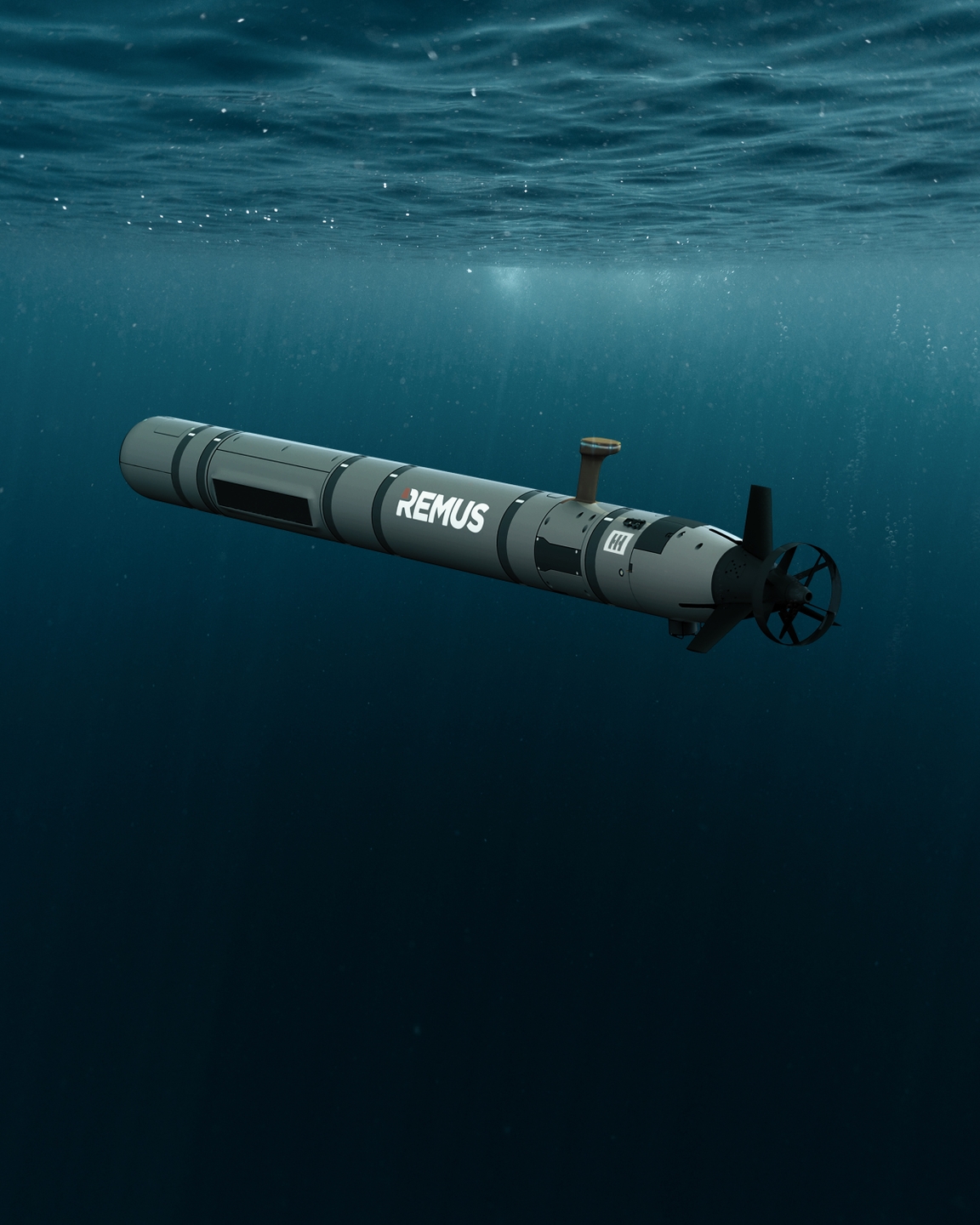
A photo accompanying this release is available at: http://hii.com/news/launched-from-submarines-trusted-by-30-navies-remus-marks-25-years-beneath-the-surface/.
The U.S. Navy’s Lionfish Program
The U.S. Navy’s current Lionfish UUV is based on HII’s REMUS 300 platform, a modular, open-architecture small unmanned underwater vehicle (SUUV) engineered for multi-mission adaptability. The program was developed in collaboration with the U.S. Navy and the Defense Innovation Unit (DIU) to accelerate the adoption of dual-use commercial technologies in U.S. Department of Defense programs.
Lionfish has been recognized as the U.S. Navy’s first successful transition from an Other Transaction Authority (OTA) prototype to full-rate production. It is also the first — and currently only — cyber-compliant UUV.
Strategic Partnerships and Future Capabilities
HII continues to invest in next-generation capabilities and strategic partnerships that expand how unmanned systems operate across the maritime domain. In a recent initiative, HII and Babcock International Group signed a strategic agreement to integrate REMUS UUVs with Babcock’s submarine weapon handling and launch systems, enabling autonomous launch and recovery of UUVs through submarine torpedo tubes and unlocking new deployment options for allied submarine forces.
In the U.S. Navy’s future fleet, and together with HII’s ROMULUS unmanned surface vehicle (USV), REMUS systems enable integration of manned and unmanned platforms.
About HII
HII is America’s largest shipbuilder, delivering the world’s most powerful ships and all-domain mission technologies, including unmanned systems, to U.S. and allied defense customers. HII is the largest producer of unmanned underwater vehicles for the U.S. Navy and the world.
With a more than 140-year history of advancing U.S. national security, HII builds and integrates defense capabilities extending from the core fleet to C6ISR, AI/ML, EW and synthetic training. Headquartered in Virginia, HII’s workforce is 44,000 strong. For more information, visit:
- HII on the web: https://www.HII.com/
- HII on Facebook: https://www.facebook.com/TeamHII
- HII on X: https://www.twitter.com/WeAreHII
- HII on Instagram: https://www.instagram.com/WeAreHII
- HII on LinkedIn: https://www.linkedin.com/company/wearehii
Contact:
Greg McCarthy
(202) 264-7126
gregory.j.mccarthy@hii-co.com
A photo accompanying this announcement is available at https://www.globenewswire.com/NewsRoom/AttachmentNg/69a11479-a25a-4f9f-b232-e3becc67f0d3
