
CitroTech Partners With Texas A&M Engineering Experiment Station to Advance Safer, High-Performance Fire-Resistant Textiles
Key Terms
water-based polymer technologies technical
polymer science technical
flame retardancy technical
PFAS regulatory
volatile organic compounds (VOCs) regulatory


Collaboration aims to bring wash-durable, water-based polymer technology from lab to real-world use, expanding fire protection across critical applications
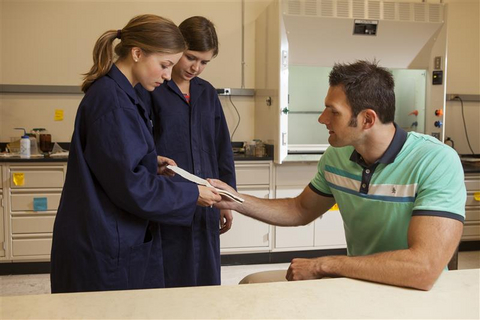
Researchers at Texas A&M Engineering Experiment Station (TEES) conduct research on fire-resistant textiles.
Launched on March 1, the collaboration is focused on addressing a persistent gap in fire-resistant materials: developing wash-durable, skin-safe textile coatings that maintain flame resistance even after repeated use and laundering—an area where conventional solutions often fall short. Initial applications are expected in firefighting gear and industrial textiles, where durability and safety are critical, with longer-term potential across home furnishings and consumer products.
“CitroTech has built its reputation on delivering fire resilience in some of the most demanding environments, from construction materials and utility infrastructure to roadside and vegetation management,” said Andrew Hotsko, Chief Operating Officer at CitroTech. “This partnership is about extending that foundation into textiles, working alongside the foremost minds in polymer science to introduce a new class of environmentally safe, fire-resistant solutions. We’re taking chemistry proven at scale and applying it to a category that has seen limited innovation, with the goal of protecting people more directly in the environments where they live and work.”
Essential to this partnership is the combination of CitroTech’s patented portfolio of fire-inhibitor chemistries and the expertise of Dr. Jaime Grunlan, a globally recognized leader in polymer science whose research has helped shape modern approaches to flame retardancy. Together, CitroTech and Texas A&M researchers are accelerating the transition from academic discovery to real-world application, addressing longstanding challenges around durability, performance, and chemical safety.
“Flame retardancy has long required trade-offs between safety, durability, and practicality, particularly in textiles that are washed, worn, and exposed to the elements,” said Dr. Grunlan. “What makes this work meaningful is the ability to move beyond those limitations. We’re moving toward solutions that can perform consistently outside the lab and at scale, which is ultimately what’s needed to better protect homes, first responders, and the communities they serve.”
The technology under development uses water-based polymers that form a thin, durable layer on fabric. When exposed to heat or flame, that layer reacts by expanding and forming a protective shield, helping slow fire spread and insulate the material beneath. Unlike many conventional treatments, these coatings are designed to stay in place over time and avoid the use of chemicals of concern, including PFAS and volatile organic compounds (VOCs).
As part of the initiative, CitroTech is funding dedicated research at TEES, including graduate-level work and advanced testing, creating a direct pipeline from early-stage research to product development. The collaboration reflects a broader strategic focus on expanding CitroTech’s portfolio through investment in cleaner, high-performance technologies that address evolving fire risks.
“This partnership exemplifies TEES’s mission to connect leading research with industry to solve complex, real-world challenges,” said Dr. Robert H. Bishop, Vice Chancellor and Dean of Texas A&M Engineering. “We’re building a blueprint for the future of safer, more effective fire-resistant materials, with far-reaching implications not only for individual safety, but for the resilience of the communities and systems we depend on.”
CitroTech will further support industry collaboration as a lead sponsor of the upcoming Fire and Polymer Workshop in
About CitroTech Inc.
CitroTech Inc. (NYSE AM: CITR) is manufacturing and deploying the CitroTech family of innovative, environmentally safe fire prevention solutions for homes, wood products, and wildfire prevention and asset protection. CitroTech is the only long-term fire inhibitor recognized by the EPA Safer Choice program and tested to UL Greenguard Gold standards, providing effective and scientifically validated wildfire mitigation while safeguarding human and environmental health. The company’s growing patent portfolio, recurring-revenue model, and scalable approach support its long-term growth and market expansion. For more information, visit www.citrotech.com.
About Texas A&M Engineering Experiment Station
Texas A&M Engineering Experiment Station (TEES) is the official research agency for Texas A&M Engineering and is pivotal in advancing interdisciplinary research across The Texas A&M University System. TEES is dedicated to addressing complex challenges through applied engineering research, managing research grants and contracts and actively fostering partnerships with industry, government and academia, benefiting Texas A&M Engineering faculty and researchers. Technology transition efforts in TEES help move research from the lab to industry and consumers. Additionally, TEES enhances engineering expertise through workforce development by training professionals in emerging fields and engaging educators and students to inspire future engineers.
View source version on businesswire.com: https://www.businesswire.com/news/home/20260512483280/en/
Media & Investor Contact:
CitroTech Inc.
Isabella Sarlo
Antenna Group
CitroTech@antennagroup.com
(516) 526-9227
Investor Relations Contact:
Brett Maas, Managing Principal
Hayden IR, LLC
CITR@haydenir.com
(480) 861-2425
Source: CitroTech Inc.