
BorgWarner Expands Series-Production Battery Management System Program with a Global OEM
Rhea-AI Summary
BorgWarner (NYSE:BWA) announced an expanded series-production battery management system (BMS) program with a global OEM, extending supply that began in 2023 to additional B- and C-segment passenger cars and light commercial BEV and PHEV lines starting in 2029. The modular BMS features a central BMU and module-level CMUs, supports fast DC charging communication, targets ASIL D functional safety goals, and is suitable for battery packs up to 800 volts. The design emphasizes compact, scalable packaging and an electronics platform that can be upgraded to support future functions, and has been validated in series production.
AI-generated analysis. Not financial advice.
Positive
- Expanded series-production award with a global OEM, extending a supply relationship since 2023
- Program covers additional B- and C-segment passenger cars and light commercial BEV/PHEV applications beginning in 2029
- BMS architecture supports up to 800V battery packs and fast DC charging communication
- Modular design (BMU + CMUs) enables flexible packaging and scalable upgrades
Negative
- Expanded applications are not scheduled to begin until 2029, delaying near-term production volume impact
- No contract value or financial guidance disclosed to quantify revenue or margin effects
News Market Reaction – BWA
On the day this news was published, BWA gained 22.45%, reflecting a significant positive market reaction. Argus tracked a peak move of +23.5% during that session. Our momentum scanner triggered 135 alerts that day, indicating very high trading interest and price volatility. This price movement added approximately $2.75B to the company's valuation, bringing the market cap to $14.98B at that time. Trading volume was above average at 1.6x the daily average, suggesting increased trading activity.
Data tracked by StockTitan Argus on the day of publication.
Key Figures
Market Reality Check
Peers on Argus
BWA gained 2.35% while close peers showed modest moves: ALV +0.58%, MOD +0.62%, ALSN +0.2%, LKQ +2.34%, and LEA -0.84%. No broad, unified sector momentum is evident.
Historical Context
| Date | Event | Sentiment | Move | Catalyst |
|---|---|---|---|---|
| Feb 05 | Dividend declaration | Positive | -0.3% | Maintained quarterly cash dividend of $0.17 per share for shareholders. |
| Jan 23 | Reputation ranking | Positive | -0.4% | Named to Fortune’s 2026 World’s Most Admired Companies list, 4th year running. |
| Nov 20 | Brand/marketing news | Neutral | -5.0% | Added Alex Palou’s likeness as 112th face on Borg-Warner Trophy. |
| Nov 13 | Dividend declaration | Positive | -1.3% | Declared $0.17 quarterly dividend, reiterating history and focus on innovation. |
| Nov 04 | Employer recognition | Positive | +0.6% | Included in Forbes America’s Best Employers for Engineers 2026 ranking. |
Recent positive reputation and dividend news often saw flat-to-negative 24h price reactions, with limited upside follow-through.
Over the last six months, BorgWarner’s news flow has centered on shareholder returns and corporate reputation. Dividend declarations on Nov 12, 2025 and Feb 4, 2026 maintained a $0.17 per-share payout but saw small negative next-day moves. Recognition by Forbes and Fortune in late 2025 and January 2026 highlighted employer strength and industry admiration, again with muted or slightly negative reactions. The Indy 500 trophy-related announcement on Nov 20, 2025 drew the sharpest -4.99% move. Today’s EV BMS program expansion contrasts these softer catalysts with a more operational, growth-oriented development.
Market Pulse Summary
The stock surged +22.4% in the session following this news. A strong positive reaction aligns with BorgWarner’s positioning near its 52-week high of $54.45 and elevated volume of 4.76M shares. Unlike recent reputation- and dividend-focused headlines, this announcement tied directly to an expanded BMS program for future BEV and PHEV platforms. Investors may reassess long-term growth prospects, but prior history of muted follow-through on good news suggests attention to position sizing and profit-taking risk.
Key Terms
battery management system technical
battery-electric vehicle technical
plug-in hybrid electric vehicle technical
battery monitoring unit technical
direct current charging technical
automotive safety integrity level d regulatory
functional safety technical
AI-generated analysis. Not financial advice.


- Battery management system (BMS) program expands to support additional battery-electric vehicle (BEV) and plug-in hybrid electric vehicle (PHEV) lines
- System in production since 2023; expanded applications beginning in 2029
- Compact, scalable design supports flexible packaging and batteries operating up to 800 volts
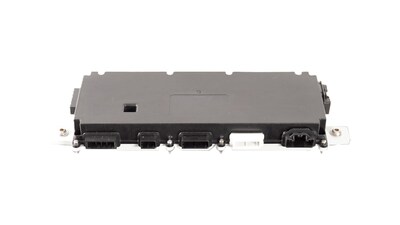
"We're pleased to expand our series-production battery management program, highlighting our customer's confidence in our production-proven design that's already performing in real-world vehicle applications," said Dr. Stefan Demmerle, Vice President of BorgWarner Inc. and President and General Manager, BorgWarner PowerDrive Systems. "As our customer adds new electrified vehicle lines, we're upgrading compatibility to help them scale efficiently while maintaining the safety, durability and performance expectations that drivers rely on."
BorgWarner's BMS is a modular system with a central battery monitoring unit (BMU) connected to cell monitoring units (CMUs) located at the battery modules. Together, they monitor charge level, battery health and temperatures, measure cell voltages, and perform passive cell balancing to help optimize performance and support long-term durability.
The system supports fast direct current (DC) charging communication and includes built-in controls and diagnostics designed to help meet demanding safety expectations, including Automotive Safety Integrity Level D (ASIL D) functional safety goals. The scalable architecture can be configured for a wide range of BEV and PHEV battery pack designs and is suitable for applications operating up to 800 volts. The compact module-level units enable flexible packaging options, and the electronics platform can be upgraded to support future functions.
Building on decades of global automotive electronics experience, the expanded program promotes a design that has been validated in series production, helping customers scale electrified vehicle portfolios while leveraging established functionality and a proven supply footprint.
About BorgWarner
For more than 130 years, BorgWarner has been a transformative global product leader bringing successful mobility innovation to market. With a focus on sustainability, we're helping to build a cleaner, healthier, safer future for all.
Forward-Looking Statements: This press release contains forward-looking statements as contemplated by the 1995 Private Securities Litigation Reform Act that are based on management's current outlook, expectations, estimates and projections. Words such as "anticipates," "believes," "continues," "could," "designed," "effect," "estimates," "evaluates," "expects," "forecasts," "goal," "guidance," "initiative," "intends," "may," "outlook," "plans," "potential," "predicts," "project," "pursue," "seek," "should," "target," "when," "will," "would," and variations of such words and similar expressions are intended to identify such forward-looking statements. Further, all statements, other than statements of historical fact contained or incorporated by reference in this press release that we expect or anticipate will or may occur in the future regarding our business strategy and measures to implement that strategy, goals, expansion and profitable growth of our business and operations, plans, references to future success and other such matters, are forward-looking statements. All forward-looking statements are based on assumptions and analyses made by us in light of our experience and our perception of historical trends, current conditions and expected future developments, as well as other factors we believe are appropriate under the circumstances. Forward-looking statements are not guarantees of performance, and the Company's actual results may differ materially from those expressed, projected or implied in or by the forward-looking statements.
You should not place undue reliance on these forward-looking statements, which speak only as of the date of this release. Forward-looking statements are subject to risks and uncertainties, many of which are difficult to predict and generally beyond our control, that could cause actual results to differ materially from those expressed, projected or implied in or by the forward-looking statements. These risks and uncertainties, among others, include: the possibility that our battery management system will not achieve its intended benefits for new vehicle lines; the supply disruptions impacting us or our customers, commodity availability and pricing; competitive challenges from existing and new competitors; the challenges associated with rapidly changing technologies, including artificial intelligence, and our ability to innovate in response; potential future changes in laws and regulations, including, by way of example, taxes and tariffs, in the countries in which we operate; potential disruptions in the global economy caused by wars or other geopolitical conflicts; our dependence on automotive and truck production, which is highly cyclical and subject to disruptions; our reliance on major OEM customers; impacts of any future strikes involving any of our OEM customers and any actions such OEM customers take in response; fluctuations in interest rates and foreign currency exchange rates; our dependence on information systems; the uncertainty of the global economic environment; the uncertainty surrounding global trade policies, including tariffs and export restrictions, and their impacts on the Company, its customers and its suppliers; and the other risks discussed in reports that we file with the Securities and Exchange Commission, including in Item 1A, "Risk Factors" in our most recently-filed Annual Report on Form 10-K and/or Quarterly Report on Form 10-Q. We do not undertake any obligation to update or announce publicly any updates to or revisions to any of the forward-looking statements in this release to reflect any change in our expectations or any change in events, conditions, circumstances, or assumptions underlying the statements.

 View original content to download multimedia:https://www.prnewswire.com/news-releases/borgwarner-expands-series-production-battery-management-system-program-with-a-global-oem-302684781.html
SOURCE BorgWarner Inc.