Trapped ion mobility spectrometry is a laboratory technique that separates charged particles (ions) by how they move through a gas under an electric field, effectively sorting them by size and shape before they are measured. Investors should care because it improves the speed and accuracy of chemical and biological analyses—like finding specific proteins or drug molecules—so products and instruments that use it can enable better diagnostics, faster research, and potentially stronger commercial value for firms in life sciences and diagnostics.
magnetic resonance mass spectrometrytechnical
An analytical technique that combines magnetic resonance principles with mass spectrometry to identify and measure molecules with very high precision, like using both a fingerprint scanner and a high-resolution camera to confirm an identity. It matters to investors because it can enable faster, more reliable detection of drugs, biomarkers or contaminants, improving product development decisions, regulatory confidence and the commercial value of life-science and manufacturing assets.
petroleomicstechnical
Petroleomics is the detailed chemical fingerprinting of crude oil and petroleum products using advanced instruments to identify thousands of individual molecules. For investors, it matters because those molecular details determine how easily oil can be refined, what products and yields it will produce, and what risks or costs (corrosion, fouling, emissions compliance) buyers and refiners may face—similar to inspecting every ingredient in a recipe to predict the final dish and its price.
solid-electrolyte interphasetechnical
A solid-electrolyte interphase (SEI) is a thin, solid layer that forms naturally on a battery’s electrode surface when the liquid inside the cell reacts with the electrode materials. Think of it like a skin that can protect the electrode but also grow thicker or break down over time, affecting how much charge the battery can hold, how fast it can be charged, and how safe and long-lasting the battery will be—key factors for investors evaluating battery performance and durability.
lithium-ion batteriestechnical
Rechargeable lithium-ion batteries are lightweight, high-energy storage cells that use lithium ions moving between electrodes to store and release electricity, like a refillable fuel tank for electronic devices and electric vehicles. Investors care because they power a wide range of products from phones to cars and grid systems, so improvements, costs, supply chain constraints, or safety issues can directly affect manufacturers’ profits, product demand, and capital expenditure plans.
pyrolysistechnical
Pyrolysis is a heat-driven process that breaks down organic or plastic materials into simpler gases, liquids and solid carbon by heating them in the absence of oxygen; think of it as controlled charring that captures useful byproducts instead of burning them to ash. Investors care because pyrolysis can turn waste into saleable fuels, chemical feedstocks or carbon-rich solids, create new revenue streams, cut disposal costs and qualify for environmental credits, all of which affect a project’s economics and sustainability profile.
biofuelstechnical
Fuels produced from recently living organic material, such as crops, plant residues, algae, or waste, that can be used as alternatives or blends with conventional petroleum fuels for transportation and energy. They matter to investors because they affect demand for agricultural commodities, energy infrastructure, and clean‑energy subsidies; like swapping one type of gasoline for another, the shift to biofuels changes which companies, technologies, and supply chains capture revenue and face regulatory pressure.
lc-mstechnical
LC-MS is a laboratory method that first separates a mixture into its individual chemical components using liquid flow, then measures each component’s weight to identify and quantify it. For investors, LC-MS acts like a high-precision barcode scanner for molecules: it provides hard evidence about a product’s composition, purity and contaminants, which affects regulatory approvals, product quality, manufacturing risk and potential liability.
See more from StockTitan in Google Search and AI answers.Adds StockTitan as a preferred source · opens Google
SAN DIEGO--(BUSINESS WIRE)--
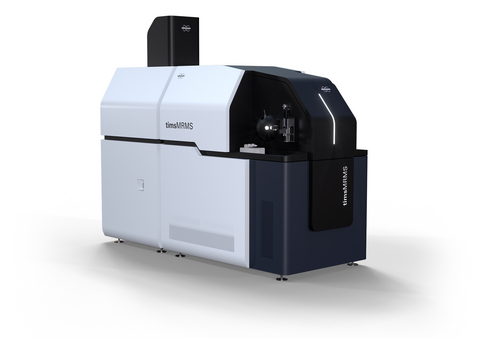
At ASMS, Bruker Corporation (Nasdaq: BRKR) announced the launch of the new timsMRMS system, designed to empower researchers in petroleomics, sustainable fuels and advanced energy storage. The timsMRMS is an innovative platform that combines Trapped Ion Mobility Spectrometry (TIMS) with extreme-resolution Magnetic Resonance Mass Spectrometry (MRMS), to unravel the complex molecular makeup of challenging fossil fuels and green energy materials. It accomplishes this with unparalleled mass resolution (>10M) and sub-parts-per-million mass accuracy, plus isotope fine structure identification-confirmation, which enables the most confident identification of molecular species in ultra-complex mixtures.
The new timsMRMS system, empowering researchers in petroleomics, sustainable fuels and advanced energy storage
As the global transition to more renewable energy accelerates, researchers face the challenge of analyzing ultra-high chemical complexity. The timsMRMS offers unprecedented capabilities for two vital areas in energy technology—renewable energy and energy storage.
Next-Gen Lithium Batteries: The timsMRMS enables ultra-high-confidence molecular characterization of electrolyte formulations, solid-electrolyte interphase (SEI) degradation, and molecular changes during charge-discharge cycles of lithium-ion batteries. This allows materials scientists to better understand and control the chemical mechanisms that dictate battery lifespan, safety, and energy density.
Advanced Bio-oils & Biofuels: By providing ultra-high-resolution clarity into molecular formulae determination and compound classes, the timsMRMS empowers researchers to address the chemical diversity of pyrolysis and biomass-derived oils, streamlining the development of sustainable, low-carbon transportation fuels.
“Many application areas in energy research present extreme levels of chemical diversity that are incredibly challenging. This has necessitated new analytical capabilities that go beyond traditional LC-MS limits,” said Dr. Paul Speir, Senior Vice President, Global MRMS Business with Bruker. “With the timsMRMS, we are equipping energy researchers with a complete unique tool that provides greater clarity and confidence in characterizing the extreme chemical complexity of next-generation batteries and alternative fuels.”
About Bruker Corporation – Leader of the Post-Genomic Era (Nasdaq: BRKR)
Bruker is enabling scientists and engineers to make breakthrough post-genomic discoveries and develop new applications that improve the quality of human life. Bruker’s high-performance scientific instruments and high value analytical and diagnostic solutions enable scientists to explore life and materials at molecular, cellular, and microscopic levels. In close cooperation with our customers, Bruker is enabling innovation, improved productivity, and customer success in post-genomic life science molecular and cell biology research, in applied and biopharma applications, in microscopy and nanoanalysis, as well as in industrial and cleantech research, and next-gen semiconductor metrology in support of AI. Bruker offers differentiated, high-value life science and diagnostics systems and solutions in preclinical imaging, clinical phenomics research, proteomics and multiomics, spatial and single-cell biology, functional structural and condensate biology, as well as in clinical microbiology and molecular diagnostics. For more information, please visit www.bruker.com.