
Bausch + Lomb Launches Bi-Blade+™ Dual-Port Vitrectomy Cutter in Europe
Key Terms
vitrectomy medical
adaptive fluidics technical
intraocular pressure (iop) medical
anterior segment surgery medical
vitreoretinal medical




- Increased cutting speed of 25,000 cuts per minute1 is designed to minimize retinal traction,2 increase vitreous flow1 and reduce infusion pressure fluctuations when used with Adaptive Fluidics.3*
-
Bi-Blade+ provides an average flow rate increase of
25% , enabling more efficient vitreous removal compared to Bi-Blade®.1*† - The resulting stability, efficiency and control help boost confidence for retina surgeons to deliver exceptional patient outcomes.
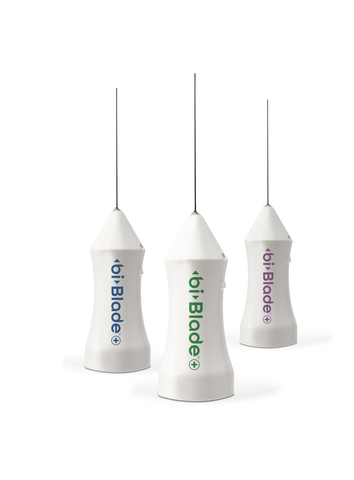
“The launch of Bi-Blade+ is the latest example of our commitment to delivering meaningful innovation in Europe,” said Luc Bonnefoy, president, Surgical, Bausch + Lomb. “Stellaris Elite has long been relied upon by European surgeons, and the 2024 Adaptive Fluidics software upgrade further enhanced the precise control and efficiency of the platform. We’re confident that the addition of Bi-Blade+ will also deliver meaningful benefits to retina surgeons and their patients.”
Bi-Blade+ provides an increased flow rate of
Adaptive Fluidics automates fluid infusion to the eye in response to real-time vacuum commands from the surgeon, delivering precise and responsive fluidics infusion at every step of a vitrectomy procedure.
These two technologies combine to support and maintain IOP stability and control. When combined with Adaptive Fluidics, Bi-Blade+ demonstrated a
“The higher cut rate of Bi-Blade+ offers a significant advantage when removing vitreous,” said Professor Marco Mura, MD, University of Ferrara,
*Based on ex vivo and in vitro testing.
**Based on ex vivo and in vitro testing comparing original Bi-Blade to single-port cutter.
†Bi-Blade® is a trademark of Medical Instrument Development Laboratories, Inc. and is used by Bausch + Lomb under license.
Bi-Blade™+ Indications and Important Safety Information
Indications and Intended Use: The Bausch + Lomb vitrectomy cutter pouches are intended to cut and remove vitreous from the eye. They are indicated for any ocular condition requiring anterior vitrectomy during anterior segment surgery and for any vitreoretinal condition requiring vitrectomy during posterior or combined surgery.
Compatible Equipment: Stellaris Elite Bi-Blade+ accessories are only intended to operate with Bausch + Lomb Stellaris Elite vision enhancement systems with Bi-Blade+ procedure pack compatibility.
Known residual risks and complications include but are not limited to: infection; inflammation; ocular damage; trauma; cataract formation (not applicable in cataract removal procedures); foreign body/particulates in eye; intraocular pressure (IOP) variance that may cause damage to patient’s eye; visual impairment; ischemia; allergic reaction; edema.
ATTENTION: See the Instructions for Use for detailed directions, proper use, and full risk and safety information.
CAUTION: Federal (
About Bausch + Lomb
Our mission is simple – we help people see better to live better, all over the world. For nearly two centuries we’ve evolved with the changing needs of patients and customers, and our commitment to innovation and improving the standard of care in eye health has never been stronger. From contact lenses to prescription products, over-the-counter options, surgical devices and more, we’re turning bold ideas into better outcomes through passion, perseverance and purpose. Learn more at www.bausch.com and connect with us on Facebook, Instagram, LinkedIn, X and YouTube.
Forward-looking Statements
This news release may contain forward-looking information and statements within the meaning of applicable securities laws (collectively, “forward-looking statements”). Forward-looking statements may generally be identified by the use of the words “anticipates,” “seeks,” “expects,” “plans,” “should,” “could,” “would,” “may,” “will,” “believes,” “potential,” “pending” or “proposed” and variations or similar expressions. These statements are based upon the current expectations and beliefs of management and are subject to certain risks and uncertainties that could cause actual results to differ materially from those described in the forward-looking statements. These risks and uncertainties include, but are not limited to, the risks and uncertainties discussed in Bausch + Lomb’s filings with the
References
-
Heuer R, Papour A, Higgins G. Vitrectomy flow performance and optimized system settings for retina shaving with 25g, 25,000cpm dual-action vitrectomy probes. Poster presented at: ARVO conference; May 2025;
Salt Lake City, UT . -
Higgins G, Papour A. Comparison of traction, sphere of influence, and pulsatile flow in-vitro vitrectomy using 25 ga 25,000 CPM dual action vitrectomy probes and 25ga 7,500 CPM single action vitrectomy probes. Poster presented at: ARVO conference; May 2025;
Salt Lake City, UT . - Papour A, Hosten L. Intraocular pressure (IOP) optimized performance settings with posterior adaptive fluidics (PAF), and 25 gauge 25,000 cpm dual-action vitrectomy cutters. Invest Ophthalmol Vis Sci. 2024;65(7). Association for Research in Vision and Ophthalmology 2024 abstract 914.
- Data on file.
© 2026 Bausch + Lomb.
BBL.0008.USA.26
View source version on businesswire.com: https://www.businesswire.com/news/home/20260507552089/en/
Media Contact:
Caryn Marshall
caryn.marshall@bausch.com
(908) 493-1381
Investor Contact:
George Gadkowski
george.gadkowski@bausch.com
(877) 354-3705 (toll free)
(908) 927-0735
Source: Bausch + Lomb Corporation