
Amazon Launches Amazon Supply Chain Services, Opening Its Logistics Network to All Businesses
Amazon (NASDAQ: AMZN) launched Amazon Supply Chain Services (ASCS) on May 4, 2026, opening its freight, distribution, fulfillment, and parcel shipping network to all businesses.
Sentiment and the balance of points
Rhea-AI Sentiment reads the wording of the document, how positive or negative its language is on a 1 to 5 scale. The balance of points shown with the takes weighs what the document actually discloses, so the two can disagree, for example when a trial that missed its main goal is described in upbeat language.




Any business can now move, store, and deliver everything from raw materials to finished products quickly and reliably, using the same supply chain that supports Amazon.com
Retail, wholesale, and commercial businesses of all sizes now have access to the same logistics capabilities that have supported Amazon’s growth for decades
Leading brands Procter & Gamble, 3M, Lands’ End, and American Eagle Outfitters, Inc. among the first to sign up for ASCS, now relying on Amazon’s logistics network across their supply chain
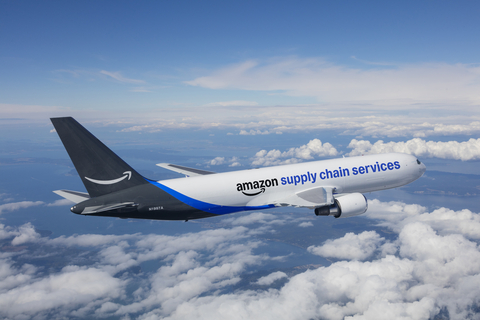
Amazon Supply Chain Services
“Amazon is bringing the infrastructure, intelligence, and scale of its supply chain services—proven over decades—to businesses everywhere, much like Amazon Web Services did for cloud computing,” said Peter Larsen, vice president of Amazon Supply Chain Services. “Supply chain wasn’t just a function at Amazon—it was core to providing an exceptional shopping experience. Our differentiator. The reason we could offer fast, dependable delivery that nobody else could. And with the launch of ASCS, we’re confident we can give any other business access to the same cost efficiency, reliability, and speed that we’ve built for Amazon customers.”
Amazon offers flexible, scalable solutions that grow with businesses as their needs evolve. From moving goods into warehouses to package delivery and everything in between, leading brands have already started to leverage Amazon’s supply chain services. Announced today, Procter & Gamble is using Amazon’s freight services to transport raw materials to production facilities and move finished goods across its distribution network; 3M is leveraging Amazon’s freight services to move products from its manufacturing sites to distribution centers worldwide; Lands’ End is using a unified inventory pool within Amazon’s network to fulfill orders across multiple sales channels; and American Eagle Outfitters, Inc. is using Amazon’s parcel shipping network to deliver online orders from its American Eagle and Aerie website directly to customers nationwide.
Drawing on decades of experience running Amazon’s own operations, ASCS helps businesses improve speed, reliability, and efficiency, even through peak demand and unexpected disruptions. Businesses can also benefit from Amazon’s AI forecasting models and vast supply chain data set, which help optimize inventory placement. Core offerings include:
- Freight: Amazon’s transportation network spans ocean, air, ground, and rail freight, supported by a fleet of 80,000+ trailers, 24,000+ intermodal containers, and 100+ aircraft, built to help businesses move goods quickly and reliably at scale. Amazon offers dependable capacity with a range of speed and service options, including time-sensitive shipments, simplified booking, customs clearance, and end-to-end shipment visibility.
- Distribution and Fulfillment: Amazon enables businesses to import inventory from overseas, store inventory in bulk, position inventory closer to demand, and fulfill customer orders across their sales channels, all within a single network. By leveraging a unified inventory pool and advanced forecasting capabilities, businesses can improve operational agility, increase inventory accuracy, and provide fast, reliable delivery across all their sales channels, including their own website, ecommerce marketplaces, social media channels, and physical stores.
- Parcel Shipping: Amazon provides shipping solutions for orders placed across all sales channels, with predictable two-to-five-day delivery speeds and seven-day-a-week service, backed by the same robust transportation network Amazon uses to deliver billions of packages each year. Businesses can benefit from flexible pickup from their own warehouses or third-party providers, access to convenient drop-off locations, and increased visibility into shipment tracking from label creation to customer doorsteps, with features like photo-on-delivery.
Starting today, businesses can access a centralized console to discover, select, and sign up for the various ASCS solutions. Businesses can visit https://supplychain.amazon.com to get started.
About Amazon Supply Chain Services
Amazon Supply Chain Services gives businesses of all types and sizes access to the freight, distribution, fulfillment, and parcel shipping capabilities Amazon has built, refined, and proven at scale over decades—supporting Amazon sellers and other businesses, regardless of where they sell. By extending the global infrastructure, technology, and operational expertise behind Amazon’s own supply chain, ASCS helps businesses improve performance, reduce complexity, and operate more efficiently. ASCS is a major growth opportunity for Amazon, supported by continued investment in forecasting, automation, and AI to enhance the speed and accuracy of its supply chain solutions.
View source version on businesswire.com: https://www.businesswire.com/news/home/20260504242139/en/
Amazon.com, Inc.
Media Hotline
Amazon-pr@amazon.com
www.amazon.com/pr
Source: Amazon.com, Inc.