
One Model, One Solver: Altair and LG Electronics Develop All-in-One Analysis Solution to Significantly Extend Product Lifespans
Rhea-AI Summary
Altair (Nasdaq: ALTR) and LG Electronics Vehicle component Solutions Company have collaborated to develop an integrated fatigue analysis solution using Altair® OptiStruct®. This collaboration has reduced development time for vehicle infotainment components by over 20%. The new solution streamlines the previously complex process of using multiple software tools and models for fatigue damage evaluation.
Key benefits include:
- Enhanced prediction of product safety and durability
- Accelerated advancements in manufacturing industries
- Identification and rectification of potential issues at the design stage
- Improved product durability and performance
OptiStruct, part of the Altair® HyperWorks® platform, offers comprehensive solutions for linear and nonlinear analyses across various disciplines, driving design optimization and structural performance validation globally.
Positive
- Collaboration with LG Electronics reduced development time for vehicle infotainment components by over 20%
- New integrated fatigue analysis solution streamlines complex processes
- Enhanced prediction of product safety and durability
- Improved product lifespan and performance
- Potential for accelerated advancements in various manufacturing industries
Negative
- None.
News Market Reaction – ALTR
In the trading session that priced this news, ALTR gained 1.74%, reflecting a mild positive market reaction.
Data tracked by StockTitan Argus on the day of publication.
AI-generated analysis. How Rhea-AI works. Not financial advice.




Complex fatigue analysis reduced development time for vehicle infotainment components by more than
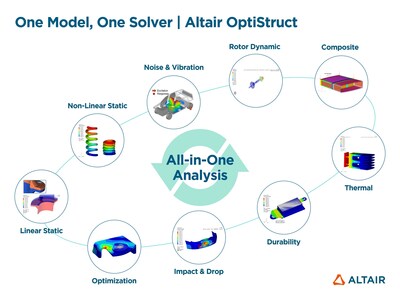
Previously, LG Electronics relied on multiple software tools and models for fatigue damage evaluation during product development, leading to prolonged analysis times and complex model management. To streamline this process, Altair and LG Electronics have developed a multiphysics-based, integrated fatigue analysis solution.
"Our collaboration with LG Electronics enhances the prediction of its products' safety and durability and accelerates advancements in various manufacturing industries, including electronic components," said Sam Mahalingam, chief technology officer, Altair. "This effort further validates Altair's leadership in electronics, helping our customers solve their toughest challenges and take ideas from concept to production faster than ever."
Leveraging its experience in mass-producing, next-generation vehicle infotainment components, LG Electronics provided various cases to enhance the software's accuracy and reliability through learning and development. This collaboration allows users to identify and rectify potential issues at the design stage, significantly extending product lifespans. Furthermore, the integrated analysis process analyzes stress and strain in various environments for optimal designs, improving product durability and performance.
"Developing safe, high-quality automotive components for our OEM customers involves numerous tests, analyses, and verification processes," said Sangyong Lee, head of the LG Electronics VS division research lab. "This collaboration combines LG Electronics' expertise with Altair's AI-powered engineering technology, enhancing our competitiveness as a solution provider."
Building on more than 25 years of innovation, OptiStruct is a proven, modern structural solver with comprehensive, accurate, and scalable solutions for linear and nonlinear analyses across statics and dynamics, vibrations, acoustics, fatigue, heat transfer, and multiphysics disciplines. It is used globally at industry-leading companies to drive design with optimization and validate structural performance. For the past two decades, OptiStruct topology optimization has driven the lightweight and structurally efficient designs of products you see and use every day. OptiStruct offers many other structural optimization methods and a broad range of essential manufacturing constraints for traditional processes, composites, and additive manufacturing.
For more information about Altair HyperWorks visit https://altair.com/altair-hyperworks.
About Altair
Altair is a global leader in computational intelligence that provides software and cloud solutions in simulation, high-performance computing (HPC), data analytics, and AI. Altair enables organizations across all industries to compete more effectively and drive smarter decisions in an increasingly connected world – all while creating a greener, more sustainable future. To learn more, please visit www.altair.com.
Media contacts | |
Altair Corporate | Altair Investor Relations |
Bridget Hagan | Stephen Palmtag |
+1.216.769.2658 | +1.669.328.9111 |
Altair | Altair |
Charlotte Hartmann | Iseul Jeong |
+49 7031 6208 0 | +82.70.4050.9210 |

 View original content to download multimedia:https://www.prnewswire.com/news-releases/one-model-one-solver-altair-and-lg-electronics-develop-all-in-one-analysis-solution-to-significantly-extend-product-lifespans-302209583.html
SOURCE Altair